






What's Happening?
An initiative by two nonprofits, the Champlain Valley Office of Economic Opportunity (CVOEO) and Champlain Housing Trust, to establish a 100-bed emergency shelter in Chittenden County, Vermont, has encountered significant opposition from South Burlington
city officials. The proposed low-barrier shelter, intended to be the largest year-round facility for unhoused individuals in the state, was slated for a former mattress store on Williston Road. However, South Burlington officials, including the City Manager, Deputy City Manager, and police and fire chiefs, issued a public memo outlining their objections. They argue that the location, approximately 3.5 miles from CVOEO’s daytime resource center in Burlington, would create accessibility challenges for unhoused individuals needing services. Furthermore, they expressed concerns about a potential increase in public safety calls and the possibility of other communities directing individuals to South Burlington. As a result of this opposition, the nonprofits have withdrawn their presentation to the South Burlington City Council and are now seeking alternative sites, making it less likely the shelter will open by its anticipated December 1 deadline.
Why It's Important?
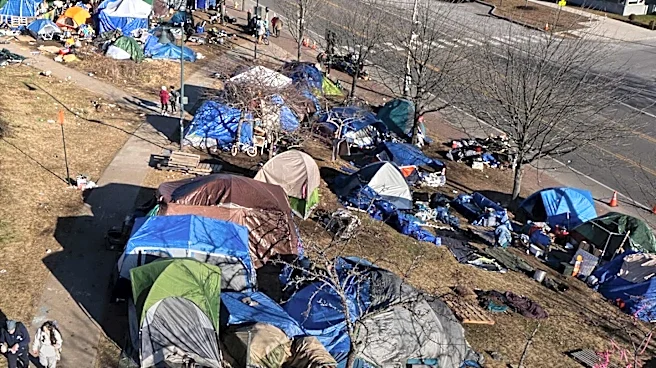
This development highlights the ongoing challenges and complexities in addressing homelessness in Vermont, particularly in its most populous county. The increasing number of unhoused individuals, with over 320 people living outdoors in and around Burlington in August, underscores the urgent need for shelter solutions. The state's restriction of the motel voucher program has exacerbated this issue, making the establishment of new shelters critical. The pushback from South Burlington officials, despite the clear need, reveals a common tension between local community concerns and regional efforts to provide social services. This situation could set a precedent for how other municipalities approach similar proposals, potentially hindering future efforts to expand shelter capacity across the state. The debate also brings to light the differing philosophies on service centralization versus distributed care for vulnerable populations, impacting the effectiveness and accessibility of support systems for those experiencing homelessness.
What's Next?
The Champlain Valley Office of Economic Opportunity (CVOEO) and Champlain Housing Trust are actively searching for alternative locations for the proposed 100-bed emergency shelter. While they had hoped to have the shelter operational by December 1, the recent setback makes this timeline increasingly unlikely. The organizations will need to identify a new site that is both suitable for a large-scale shelter and can gain the support of local municipal leaders. This process may involve extensive community engagement and negotiation to address concerns similar to those raised by South Burlington officials, such as public safety and access to services. The state government, including Governor Phil Scott, has also expressed a preference for distributing shelter beds across the county rather than concentrating them in one large facility, which could influence future proposals. The outcome of this search will significantly impact the availability of shelter for unhoused individuals in Chittenden County as winter approaches.
Beyond the Headlines
The controversy surrounding the proposed shelter in South Burlington extends beyond immediate logistical and political hurdles, touching upon deeper societal issues regarding community responsibility and the integration of vulnerable populations. The argument that a shelter might increase public safety calls or attract individuals from other communities reflects a broader societal apprehension often associated with facilities serving unhoused populations. This 'not in my backyard' (NIMBY) phenomenon can impede critical social infrastructure development, even when there is a clear humanitarian need. The debate also highlights the ethical dilemma of centralizing social services versus distributing them. While centralization can offer efficiency and comprehensive support, it can also place an undue burden on specific communities and create transportation barriers for those in need. Conversely, distributed services might face more widespread local resistance. This situation underscores the ongoing challenge of balancing the needs of unhoused individuals with the concerns of established communities, prompting a re-evaluation of how communities collectively address homelessness and foster inclusive environments.