





What's Happening?
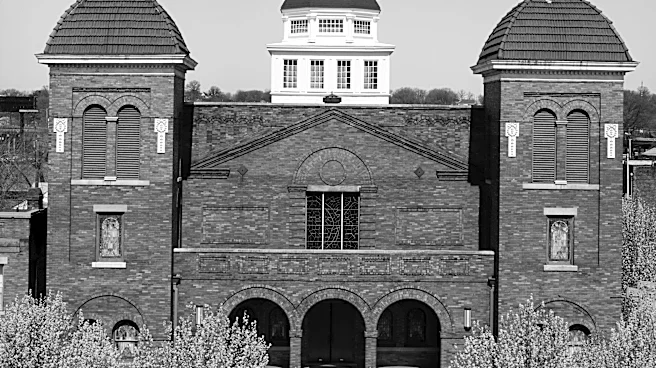
St. Anthony's Roman Catholic Church, located in Wilmington, Delaware's Little Italy neighborhood, is a significant Catholic parish. The church, built in the Romanesque Revival style, was constructed over seven years by Italian immigrants under the direction
of Ernesto DiSabatino. The parish also includes St. Anthony's School and Padua Academy and operates under the jurisdiction of the Diocese of Wilmington, managed by the Oblates of St. Francis de Sales. Ernesto DiSabatino, who led the construction, was the founder of Ernest DiSabatino and Sons, a company that began as a stone masonry business and evolved into EDiS Construction. The church was officially listed on the National Register of Historic Places in 1984, acknowledging its architectural and cultural importance.
Why It's Important?
The recognition of St. Anthony's Roman Catholic Church on the National Register of Historic Places highlights the cultural and architectural contributions of Italian immigrants to the United States. This designation helps preserve a significant landmark that tells a story of community building and religious devotion. For the local community in Wilmington, particularly the Little Italy neighborhood, the church serves as a central cultural hub, reinforced by events like the annual Italian Festival celebrating the Feast of Saint Anthony. The church's historical status can also attract tourism and foster a sense of local pride, contributing to the economic and social fabric of the area. The involvement of figures like Ernesto DiSabatino, who received the Papal Cross of Honor Pro Ecclesia et Pontifice, further underscores the deep community investment in its construction and legacy.
What's Next?
The continued preservation of St. Anthony's Roman Catholic Church is expected, given its status on the National Register of Historic Places. This designation often provides access to grants and resources for maintenance and restoration, ensuring the church's longevity. The annual Italian Festival will likely continue to draw visitors and reinforce the church's role as a cultural cornerstone in Wilmington. Future efforts may focus on educational programs that highlight the church's history and its connection to the Italian immigrant experience in Delaware. The ongoing operation by the Oblates of St. Francis de Sales suggests a stable future for its religious and educational functions within the community.
Beyond the Headlines
The story of St. Anthony's Roman Catholic Church extends beyond its architectural beauty and religious function; it is a testament to the enduring legacy of immigrant communities in shaping the American landscape. The seven-year construction effort by Italian immigrants symbolizes their dedication and resilience in establishing a spiritual and communal home in a new country. This narrative is crucial for understanding the diverse cultural tapestry of the United States. The church's Romanesque Revival style, popular in the late 19th and early 20th centuries, also reflects broader architectural trends and the desire of immigrant groups to build structures that echoed their European heritage. Its listing on the National Register of Historic Places serves as a reminder of the importance of preserving these cultural touchstones for future generations, offering insights into the social, economic, and religious history of American cities.