





What's Happening?
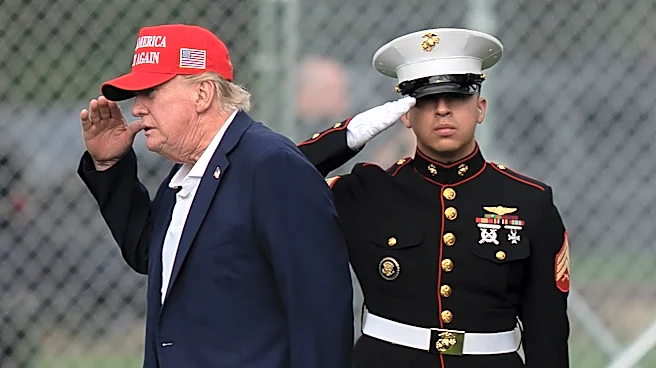
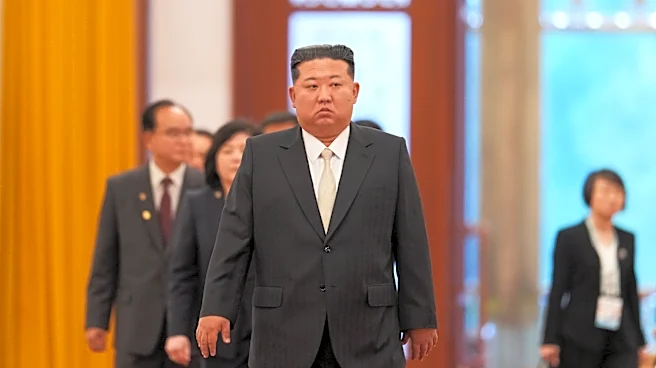
President Trump is facing significant criticism from Democratic lawmakers following his decision to 'substantially reduce' joint military exercises between the United States and South Korea. The President announced this move on Sunday, citing his 'very
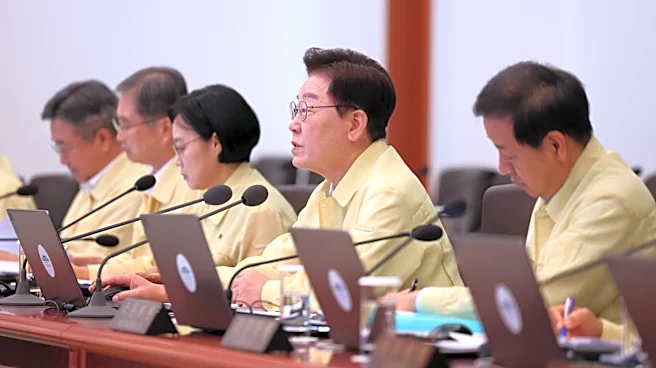
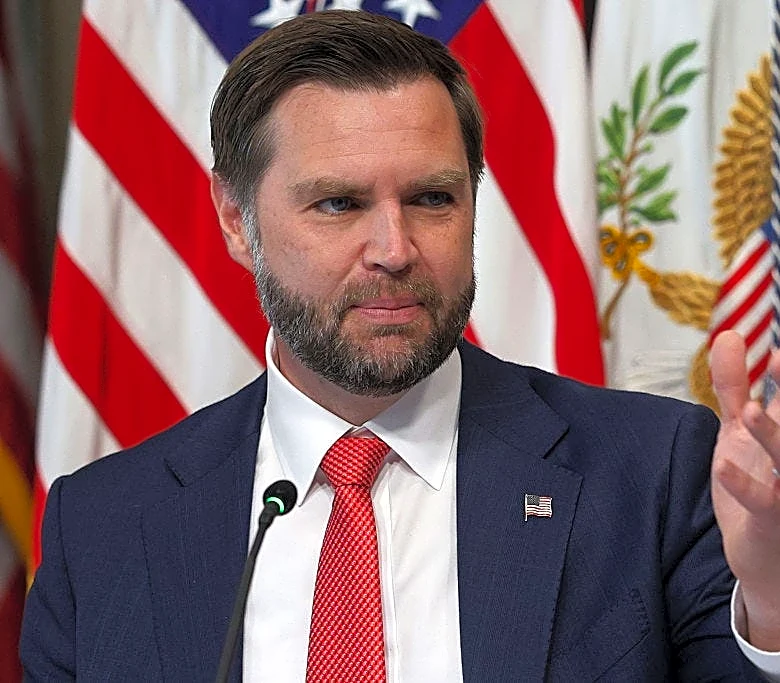
good relationship' with North Korean leader Kim Jong Un and South Korea's refusal to join the U.S.-Israel war against Iran. Democratic Senator Andy Kim stated that decisions about joint exercises should be made jointly, not unilaterally via social media, emphasizing the strategic partnership with South Korea as a 'linchpin for security and stability in the Indo-Pacific.' Congresswoman Pramila Jayapal labeled the decision 'dangerous' for regional stability, while Jack Reed, the top Democrat on the Senate Armed Services Committee, called it 'inane,' suggesting it signals that 'America’s commitments are negotiable.' Republican Senator Thom Tillis also criticized the move, arguing it allows North Korea to increase support for Russia in Ukraine.
Why It's Important?
This decision by President Trump carries significant implications for U.S. foreign policy, alliances, and regional stability in the Indo-Pacific. The reduction in joint military drills with South Korea, a long-standing ally under the 1953 Mutual Defense Treaty, could be perceived as a weakening of U.S. commitment to its allies. This perception is particularly concerning as it comes at a time when the U.S. is shifting its foreign policy focus and dealing with the war in Iran. Critics argue that such unilateral actions undermine trust and provide an opportunity for adversaries like China and Russia to test U.S. resolve. Furthermore, the rationale behind the decision, linking it to South Korea's stance on the U.S.-Israel war against Iran, introduces a new dimension to alliance dynamics, potentially pressuring allies to align with U.S. military engagements beyond their immediate regional interests. The move also raises questions about the effectiveness of U.S. denuclearization efforts with North Korea, as previous summits between President Trump and Kim Jong Un did not lead to a diplomatic breakthrough.
What's Next?
The immediate aftermath of President Trump's decision is likely to involve continued political debate and scrutiny from Congress. Democratic lawmakers have indicated they will 'continue to press this administration' on strengthening security and economic ties in the Indo-Pacific. It remains to be seen how South Korea will officially respond to the reduced drills and whether this will lead to a re-evaluation of their defense posture or diplomatic engagements. The decision could also prompt further discussions within the Pentagon regarding the strategic implications of scaling back exercises. Additionally, the reactions from North Korea, China, and Russia will be closely watched, as they may interpret this as an opportunity to advance their own regional agendas. The long-term impact on the U.S.-South Korea alliance and the broader security architecture of the Indo-Pacific will depend on subsequent policy decisions and diplomatic efforts to reassure allies and deter potential adversaries.
Beyond the Headlines
Beyond the immediate political and military ramifications, President Trump's decision highlights a deeper shift in U.S. foreign policy, moving away from traditional alliance structures and towards a more transactional approach. The President's public statements, particularly his use of social media for significant policy announcements and his linking of military cooperation to unrelated geopolitical conflicts, challenge established diplomatic norms. This approach could lead to increased unpredictability in international relations and potentially encourage other nations to question the reliability of U.S. commitments. The emphasis on 'America First' and the expectation that allies should directly support U.S. military endeavors, even those outside their immediate security concerns, could strain long-standing partnerships. This development also underscores the growing influence of domestic political considerations on foreign policy decisions, potentially leading to a more isolationist stance or a redefinition of what constitutes a 'strategic partnership' for the United States.