





What's Happening?
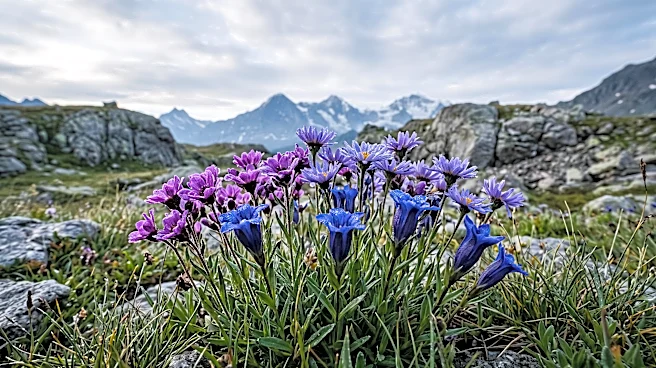
Dr. Amy Iler, an associate conservation scientist with the Chicago Botanic Garden, is conducting research at the Rocky Mountain Biological Research Laboratory (RMBL) in Gothic, Colorado. Her work focuses on understanding how climate change and pollinator
abundance affect plant populations. A key aspect of her research is the study of perennial plants, which she has found to be more resilient to pollinator population declines because they can bloom multiple times throughout their lifespan. This allows them to reallocate resources to survival and attempt reproduction in subsequent years if initial pollination fails. Dr. Iler's research is particularly valuable due to the intact native bee population at RMBL, which lacks nonnative honey bees, providing a pristine environment for her studies.
Why It's Important?
Dr. Amy Iler's research is crucial for understanding the ecological impacts of climate change in the Rocky Mountains and beyond. By identifying which types of plants are most vulnerable to pollinator declines, her work provides essential data for conservation strategies. The findings highlight the importance of perennial plants in maintaining ecosystem stability amidst environmental changes. This research can inform land management practices, conservation policies, and public initiatives aimed at protecting biodiversity. The insights gained are vital for federal government decisions and organizations like Colorado Parks and Wildlife, helping them to develop effective measures to mitigate the effects of climate change on plant and pollinator populations, which are fundamental to healthy ecosystems and agricultural productivity.
What's Next?
The ongoing research by Dr. Amy Iler and other scientists at RMBL will continue to provide critical data on climate change impacts in the Rocky Mountains. Future steps involve further analysis of her findings to refine understanding of plant vulnerability and resilience. The dissemination of her research results will be crucial for informing conservation efforts and public awareness campaigns. Recommendations stemming from her work, such as building pollinator habitats by planting native plants or creating 'bee hotels,' are actionable steps that individuals and communities can take. Continued collaboration between researchers, government agencies, and conservation organizations will be essential to translate these scientific findings into effective, long-term strategies for ecological preservation in the face of climate change.
Beyond the Headlines
Dr. Amy Iler's research delves into the intricate web of ecological relationships, revealing deeper implications for environmental health. The focus on native bee populations underscores the often-overlooked importance of indigenous species in maintaining ecosystem balance, contrasting with the broader reliance on nonnative honey bees. This highlights the need for a more holistic approach to pollinator conservation that prioritizes local biodiversity. Furthermore, the resilience of perennial plants, as identified in her study, offers a potential blueprint for climate-adaptive landscaping and agricultural practices. This research not only informs scientific understanding but also encourages a shift in public perception towards valuing and actively supporting the complex natural systems that underpin our environment, emphasizing the interconnectedness of climate, plants, and pollinators.