






What's Happening?
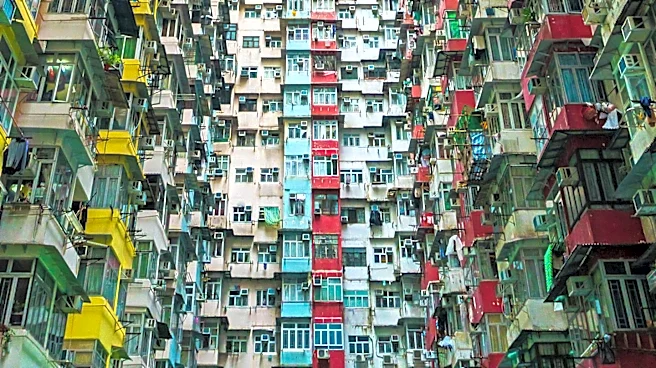
Hong Kong's Chungking Mansions, a renowned high-rise development, is striving for acceptance as the city undergoes a significant reshaping of its social fabric. This iconic building, often described as a hub for diversity, offers a unique glimpse into
globalization. Despite the implementation of a strict national security law in 2020 and the impact of the COVID-19 pandemic, which led many Americans and Europeans to leave the city, Hong Kong continues to be viewed as a place of opportunity by many. Chungking Mansions, in particular, serves as a vibrant center for individuals from across the Global South, with an estimated hundred nationalities passing through its corridors annually, many engaged in business activities. The building is characterized by its diverse array of shops and restaurants, reflecting its multicultural population.
Why It's Important?
The struggle for acceptance faced by Chungking Mansions and its residents highlights broader issues of identity, immigration, and social integration within a globalized urban environment. For the U.S., this situation offers a case study in how diverse communities navigate national security measures and societal changes in international hubs. The experiences of ethnic minorities in Hong Kong, who report feeling discriminated against in terms of salary compared to their white and Chinese counterparts, resonate with ongoing discussions about racial and ethnic equity in the U.S. The effort to establish a 'Diversity Hub' within Chungking Mansions to tell the story of Hong Kong's ethnic minorities underscores the importance of cultural preservation and advocacy for marginalized groups, a theme relevant to civil society organizations and policymakers in the U.S. addressing similar challenges. The narrative of individuals like Fahad Siddiqui, who identifies as a Hong Konger despite his Pakistani background, reflects the complexities of national identity in an increasingly interconnected world.
What's Next?
The ongoing efforts by residents and advocates within Chungking Mansions, such as the establishment of the Diversity Hub, are likely to continue fostering a sense of community and pride among Hong Kong's ethnic minorities. This initiative aims to challenge prejudiced views and promote a more inclusive understanding of Hong Kong identity. Future developments may include increased advocacy for policy changes to address discrimination and greater recognition of the contributions of diverse communities to the city's social and economic landscape. The success of these efforts could serve as a model for other global cities grappling with similar issues of diversity and integration. Internationally, the story of Chungking Mansions will likely remain a point of interest for researchers and policymakers studying globalization, urban sociology, and human rights, potentially influencing discussions on how to support and protect multicultural communities in rapidly changing urban centers.
Beyond the Headlines
The story of Chungking Mansions delves into the less visible aspects of globalization, revealing how economic opportunities attract diverse populations and create unique cultural enclaves. It challenges the notion that 'international' solely refers to Western influence, emphasizing the significant role of the Global South in shaping urban dynamics. The building's history as a hub for trade, including the distribution of mobile phones across Sub-Saharan Africa, illustrates the informal yet powerful networks that underpin global commerce. Furthermore, the struggle for acceptance faced by its residents highlights the persistent challenges of xenophobia and discrimination, even in ostensibly cosmopolitan cities. This situation prompts a deeper reflection on how national identity is constructed and contested in multicultural societies, and the ethical imperative to ensure equitable treatment and opportunities for all residents, regardless of their ethnic or national origin. The resilience and entrepreneurial spirit within Chungking Mansions offer a compelling narrative of adaptation and community building in the face of adversity.