
What's Happening?
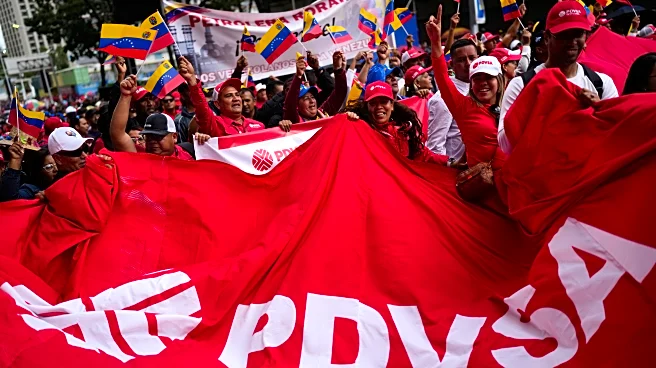
Venezuela's acting President Delcy Rodríguez has enacted a significant reform by signing a law that opens the country's oil sector to privatization. This move marks a departure from the socialist policies
that have dominated Venezuela for over two decades. The reform aims to attract foreign investment to revitalize the nation's struggling oil industry, which has been crippled by economic sanctions and mismanagement. The new legislation allows private companies to manage oil production and sales, ending the state-owned Petróleos de Venezuela SA's monopoly. It also introduces independent arbitration for disputes, a change designed to reassure foreign investors wary of past expropriations. The U.S. Department of Treasury has begun easing sanctions on Venezuelan oil, further facilitating this shift.
Why It's Important?
This development is crucial as it represents a potential turning point for Venezuela's economy, which heavily relies on oil revenues. By opening the oil sector to private investment, the government hopes to boost production and economic growth. The reform could also lead to improved relations with the U.S., as it aligns with President Trump's administration's interest in controlling Venezuela's oil exports. For U.S. energy companies, this presents an opportunity to re-enter a market with the world's largest proven crude reserves. However, the success of this initiative depends on the government's ability to maintain transparency and accountability, which are critical to gaining investor confidence.
What's Next?
The Venezuelan government will need to implement the new law effectively to attract the desired foreign investment. This includes setting clear guidelines for private companies and ensuring a stable political and economic environment. The U.S. may continue to adjust its sanctions policy in response to these changes, potentially leading to increased cooperation between the two countries. Meanwhile, opposition lawmakers are advocating for additional transparency measures to prevent corruption and ensure that the benefits of increased oil production are distributed fairly.
Beyond the Headlines
The privatization of Venezuela's oil sector could have long-term implications for the country's political landscape. By moving away from socialist policies, the government may face resistance from factions within the ruling party and the public who have benefited from state control. Additionally, the involvement of foreign companies could lead to geopolitical shifts, as other nations may seek to influence Venezuela's oil policies. The success of this reform could also serve as a model for other resource-rich countries facing similar economic challenges.