







What's Happening?
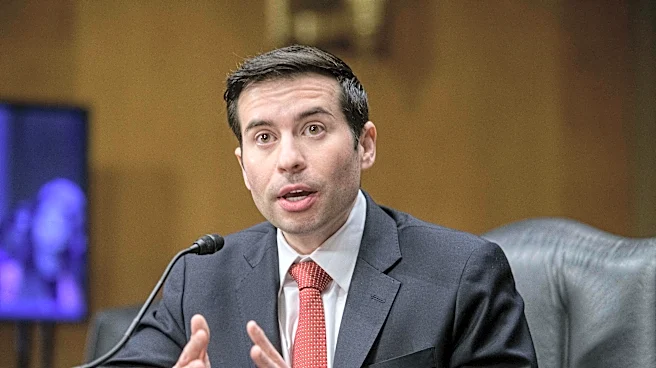
Alex Bores, a candidate running to succeed Rep. Jerry Nadler in Congress, is receiving support from a wide range of groups with differing views on Israel. Bores, a New York State Assembly member, has managed to secure endorsements from both pro-Israel
advocates and progressive groups that often criticize Israeli policies. This unusual coalition, dubbed the 'Boalition,' reflects Bores' ability to appeal to diverse constituencies. His campaign focuses on regulating artificial intelligence, a stance that has garnered him support from progressive organizations. Despite his past work with Palantir, a company criticized for its contracts with ICE, Bores has distanced himself from those associations, emphasizing his commitment to progressive values.
Why It's Important?
Bores' ability to attract support from both sides of the Israel debate is significant in a political climate where Israel is a polarizing issue. His campaign highlights the potential for bridging divides within the Democratic Party, particularly in a district with a large Jewish population. Bores' focus on AI regulation also underscores the growing importance of technology policy in political campaigns. His candidacy could influence how future candidates navigate complex issues like Israel and technology, potentially reshaping the political landscape in heavily Jewish districts. The support from diverse groups suggests a shift towards more nuanced positions on contentious issues.
What's Next?
As the election approaches, Bores will continue to navigate the challenges of maintaining his broad coalition. His ability to balance support from pro-Israel and progressive groups will be tested as he addresses policy questions and debates with opponents. The outcome of this race could set a precedent for how candidates approach divisive issues in future elections. Observers will be watching to see if Bores' strategy of focusing on AI regulation while maintaining diverse support can lead to electoral success. The results may influence how other candidates position themselves on similar issues in upcoming races.