



What's Happening?
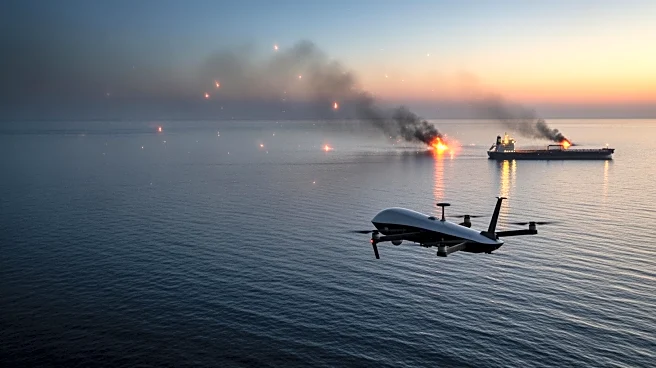
A Russian oil tanker was destroyed by Ukrainian drones in a significant operation in the Mediterranean Sea. This event marks the first time Ukraine has conducted such an operation in neutral waters, as previously, their drone attacks were limited to the Black
Sea. The tanker, identified as the Qendil, was not carrying any cargo at the time of the attack, having recently unloaded oil at the Indian port of Sikka. Ukrainian officials have stated that the operation posed no environmental threat. The attack resulted in the tanker suffering critical damage, with dramatic footage showing the vessel being engulfed in a fireball.
Why It's Important?
This operation signifies a strategic escalation in Ukraine's military tactics, extending their reach beyond the Black Sea into neutral waters. The destruction of the Russian tanker could have implications for international maritime security and the ongoing conflict between Ukraine and Russia. It highlights Ukraine's increasing capability and willingness to target Russian assets far from its borders. This could lead to heightened tensions in the region and potentially impact global oil supply routes, as well as international diplomatic relations concerning maritime security.
What's Next?
The international community may respond to this escalation with calls for increased maritime security measures. Russia is likely to react strongly, potentially increasing its naval presence in the Mediterranean. This incident could also prompt discussions at international forums about the legality and implications of military actions in neutral waters. Stakeholders in the global oil market may monitor the situation closely for any disruptions in supply routes.
Beyond the Headlines
The operation raises questions about the evolving nature of warfare, particularly the use of drones in international waters. It also underscores the potential for conflicts to spill over into areas previously considered neutral, challenging existing international maritime laws and norms. The incident may lead to a reevaluation of security protocols for commercial vessels operating in contested regions.