





What's Happening?
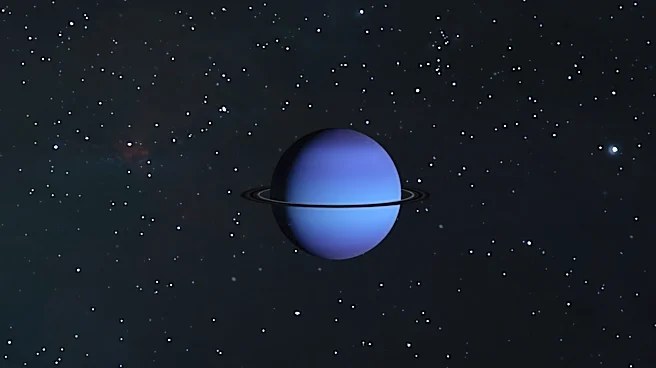
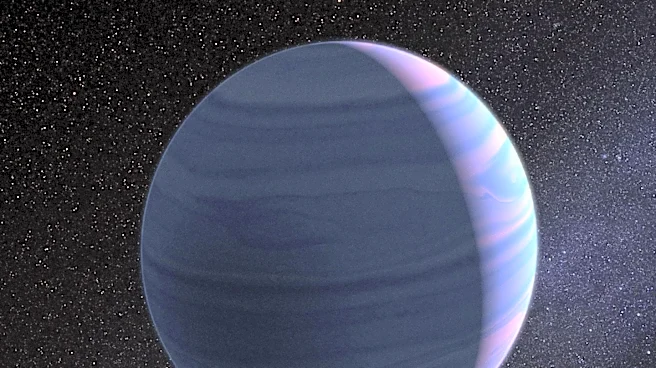
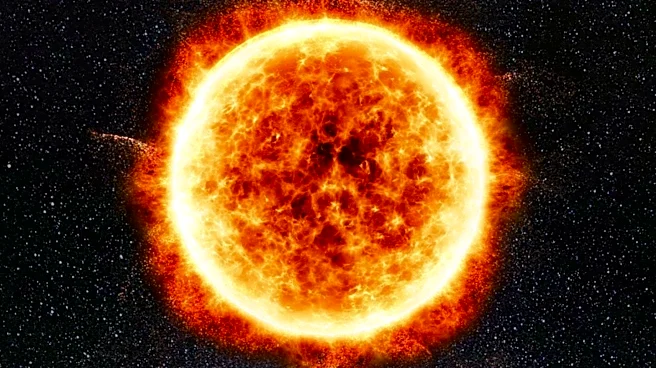
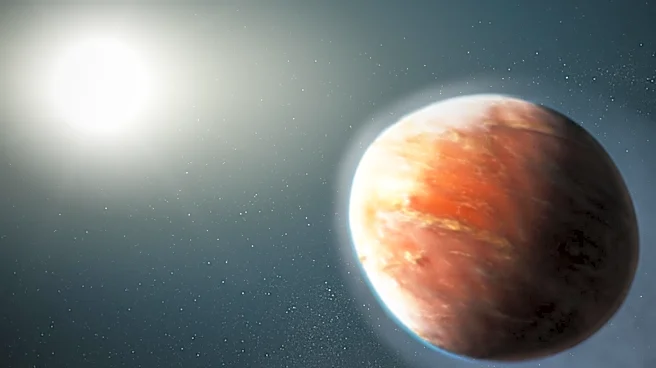
NASA's Transiting Exoplanet Survey Satellite (TESS) mission has identified two new 'super-puff' planets, TOI-791 b and TOI-791 c, which are notable for their extremely low density. These planets, orbiting a Sun-like star named TOI-791 located approximately
1,113 light years from Earth, are roughly the size of Jupiter but possess only a fraction of its mass. TOI-791 b contains just 3.0 percent of Jupiter's mass, while TOI-791 c contains 5.9 percent. The discovery was made by observing dips in the star's brightness, indicating planetary transits. The planets' long orbits and gravitational interactions provide a unique opportunity to study their formation and evolution.
Why It's Important?
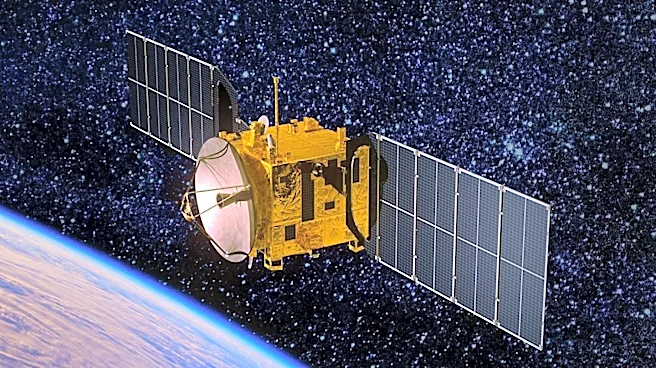
The discovery of these super-puff planets challenges existing theories of planet formation and density. Their low density suggests unique atmospheric compositions and formation histories, offering insights into planetary evolution. Understanding these planets could help refine models of how gas giants form and migrate within their solar systems. The findings also highlight the capabilities of the TESS mission in identifying and studying distant exoplanets, contributing to our broader understanding of the universe and potentially informing future space exploration missions.
What's Next?
Further studies are planned to analyze the chemical makeup of the planets' atmospheres and their orbital dynamics. Scientists aim to understand how these planets maintain such low densities and what this reveals about their formation. The TESS mission will continue to monitor these and other exoplanets, providing data that could lead to new discoveries about planetary systems beyond our own.