







What's Happening?
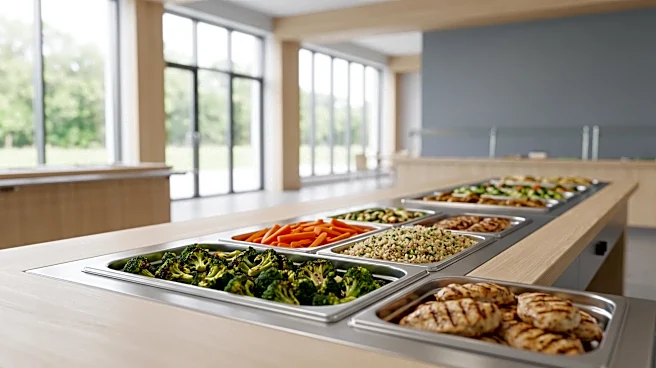
The Anchorage School District (ASD) has completed a four-year transition, expanding its new student nutrition service model to all 57 elementary schools. This initiative moves away from a decades-old pre-packaged tray system to a 'traditional service'
model where students serve themselves from bulk, open-tray stations. According to Marcie McGill, ASD’s student nutrition senior director, the previous system led to increased waste and reduced food quality. The new approach allows students to choose or decline individual items, which has resulted in them eating 30% more of both the entrée and vegetables, with very little produce leftover. The district's central kitchen has also shifted to scratch cooking, making items like pizza dough and marinara sauce in-house, and is even testing new menu items such as a Copper River salmon bowl for older students. This transformation aims to provide better quality food and more choices for students.
Why It's Important?
This expansion is significant as it redefines school lunch programs from mere nutrition initiatives to student success strategies. National research cited by McGill indicates that consistent participation in school lunch programs can improve academic outcomes, equating to an additional two and a half months of schooling per year for students attending three out of five days a week. By offering more appealing and higher-quality food, the ASD aims to boost participation and, consequently, academic performance. The shift to scratch cooking and local sourcing also supports healthier eating habits and potentially local economies. This model could serve as a blueprint for other U.S. school districts looking to enhance student well-being and academic achievement through improved food services, addressing issues of food waste and nutritional intake in schools nationwide.
What's Next?
The Anchorage School District will continue to monitor the impact of its expanded lunch service model on student health and academic outcomes. The district is actively recruiting culinary professionals for positions at its central kitchen and school cafeterias, indicating a sustained commitment to this new approach. Families needing financial assistance for meals can apply for free and reduced-price options through the ASD website. The success of this program in Anchorage could lead to its adoption or adaptation by other school districts across the U.S., potentially influencing national school nutrition policies and practices. Continued research partnerships with institutions like the University of Alaska Anchorage and Merrimack College will likely provide further data on the long-term benefits of this transformed service model.
Beyond the Headlines
Beyond the immediate benefits of improved nutrition and reduced waste, this initiative reflects a broader philosophical shift in how educational institutions view their role in student development. By emphasizing student choice and quality, the ASD is fostering a more positive relationship between students and healthy eating, moving away from a 'one-size-fits-all' approach. This could have long-term cultural implications, encouraging healthier dietary habits that extend beyond the school environment. The focus on scratch cooking and potentially local sourcing also highlights a growing awareness of food systems and sustainability within public institutions. This transformation underscores the idea that a holistic approach to education includes nurturing students' physical well-being, recognizing its profound link to cognitive function and overall success.