








What's Happening?
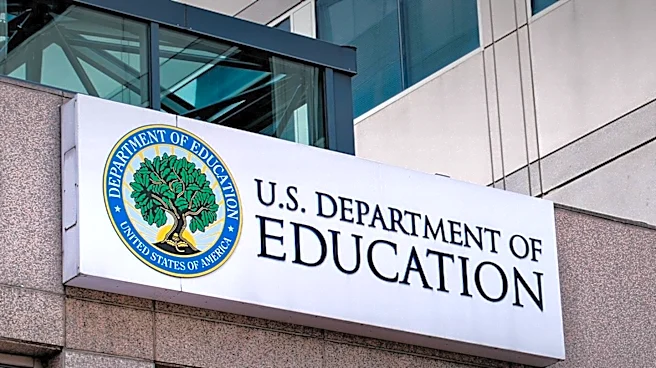
The advocacy group Student Defense has filed a class-action lawsuit against the U.S. Department of Education. The lawsuit, filed on behalf of Kendrick Gaussoin and other borrowers, alleges that the department is failing to provide promised debt relief
to students whose schools closed. Gaussoin attended the Brooks Institute, a visual arts college that shut down in 2016. Despite a January 2025 decision by the Biden administration that expanded the timeframe for 'closed school discharge' relief, many eligible borrowers, including Gaussoin, have reportedly had their applications denied. The lawsuit claims that thousands of borrowers are entitled to these discharges and are being forced to continue making payments, facing potential default consequences like wage garnishment and seizure of federal benefits. The Education Department has not yet responded to requests for comment regarding this lawsuit.
Why It's Important?
This lawsuit highlights a critical issue for student loan borrowers who have been left with debt but no degree due to school closures. The failure of the Department of Education to implement its own expanded relief policies can have severe financial repercussions for these individuals, potentially leading to ruined credit, wage garnishment, and increased financial instability. For the broader student loan landscape, this legal challenge underscores ongoing systemic problems in debt relief administration and accountability. It also puts pressure on the government to uphold its commitments to borrowers, especially those who have been disadvantaged by institutional failures. The outcome of this lawsuit could set a precedent for how the department handles similar cases and could influence future policy decisions regarding student loan forgiveness programs.
What's Next?
The lawsuit will proceed through the legal system, with Student Defense seeking to compel the Department of Education to grant the promised closed school discharges to eligible borrowers. The department will likely be required to formally respond to the allegations. This case could lead to a court order mandating the department to process these relief applications correctly, potentially affecting thousands of borrowers. Stakeholders, including other advocacy groups and affected borrowers, will closely watch the proceedings. Depending on the court's decision, there could be significant financial relief for many individuals, or further legal battles if the department appeals. This could also prompt legislative action or internal policy reviews within the Department of Education to prevent similar issues in the future.
Beyond the Headlines
This legal action delves into the ethical and administrative responsibilities of government agencies in fulfilling promises made to citizens, particularly vulnerable populations like students impacted by school closures. It raises questions about the efficacy of existing debt relief mechanisms and the bureaucratic hurdles borrowers face even when policies are in their favor. The lawsuit also touches upon the broader issue of accountability for defunct educational institutions and the financial burden placed on students when such institutions fail. Long-term, a successful outcome could reinforce the principle that government agencies must adhere to their own stated policies, potentially leading to more robust oversight and streamlined processes for student loan relief programs. Conversely, a failure could further erode public trust in these programs and the institutions meant to administer them.