
What's Happening?
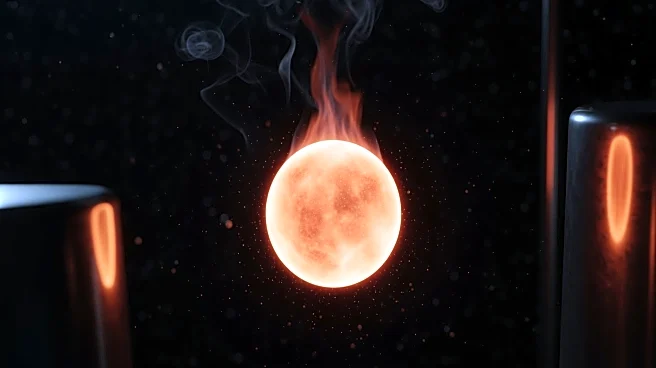
Chinese astronauts aboard the Tiangong space station conducted a fire experiment by lighting a match, revealing unique combustion phenomena in microgravity. The experiment, broadcasted live, demonstrated
how flames behave differently in space compared to Earth. Without gravity, the flame formed a spherical shape rather than the typical teardrop seen on Earth. This experiment highlights the importance of understanding fire behavior in space to ensure the safety of future space missions. The demonstration was part of a broader effort to study combustion in microgravity, which can provide insights into designing safer spacecraft and improving fire detection and suppression systems.
Why It's Important?
Understanding combustion in microgravity is crucial for the safety of astronauts and the development of future space missions. The unique behavior of flames in space can inform the design of safer spacecraft and improve fire safety protocols. This research is particularly important as space missions become longer and more ambitious, such as potential missions to Mars. The insights gained from these experiments can also contribute to advancements in combustion technology on Earth, potentially leading to cleaner and more efficient energy systems.
What's Next?
The findings from the Tiangong experiment may lead to further research into combustion in microgravity, with potential applications in both space and terrestrial environments. Space agencies like NASA may incorporate these insights into the design of future spacecraft and safety protocols. Additionally, the experiment could inspire similar studies on other space stations, contributing to a broader understanding of fire behavior in space.
Beyond the Headlines
The experiment underscores the ongoing collaboration and competition in space exploration, with China conducting significant research independently of the International Space Station. This highlights the geopolitical dimensions of space exploration, as countries seek to establish their presence and capabilities in space. The research also raises questions about the ethical and safety considerations of conducting potentially hazardous experiments in space.