



What's Happening?
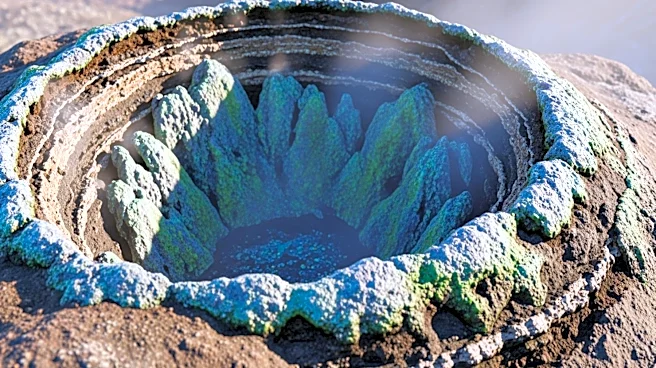
New research published in Communications Earth & Environment indicates that the Chicxulub impact, which led to the extinction of the dinosaurs, may have created a hydrothermal vent system lasting up to eight million years. This is significantly longer
than the previously estimated two million years. Scientists analyzed samples from the crater's peak ring, revealing a prolonged period of hydrothermal activity. The study suggests that the porous, fractured rocks created by the impact provided microenvironments conducive to supporting life, potentially offering insights into similar processes on other planets.
Why It's Important?
The findings have significant implications for understanding the potential for life in extreme environments, both on Earth and extraterrestrial bodies. The extended hydrothermal activity at Chicxulub could have supported unique ecosystems, offering a model for how life might exist in similar conditions elsewhere, such as on Mars. This research enhances our understanding of how life can adapt and thrive in the aftermath of catastrophic events, providing valuable insights for astrobiology and the search for life beyond Earth.
What's Next?
Researchers are considering the implications of these findings for future space exploration missions. The study suggests that impact craters on other planets, like Mars, could have hosted similar hydrothermal systems, potentially supporting life. Future missions may focus on identifying and studying such craters to assess their habitability. Additionally, further analysis of the Chicxulub samples could provide more detailed insights into the conditions that supported prolonged hydrothermal activity.