






What's Happening?
A team of Penn State researchers, led by Katsuhiko Murakami, the Stanley Person Professor of Molecular Biology, has for the first time captured the process of gene transcription by eukaryotic RNA polymerase II within living organisms. Using fruit fly
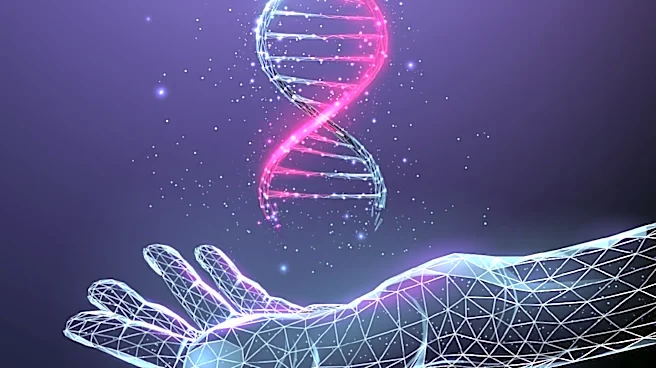
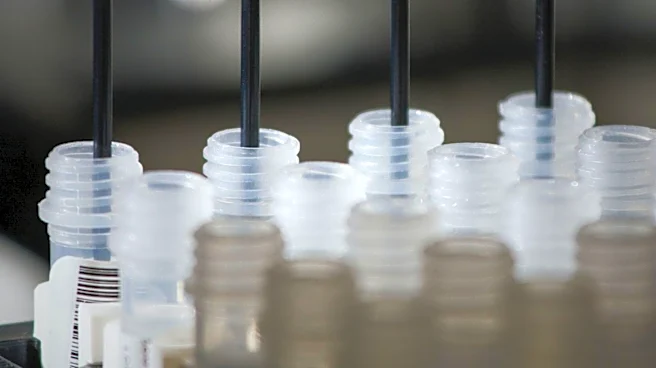
embryos, they developed a method to extract intact 'transcription complexes'—clusters of RNA polymerase II and DNA—and then employed cryo-electron microscopy (cryo-EM) to visualize them at near-atomic detail. This novel approach revealed a more dynamic and varied picture of the gene-copying process than previously understood. Contrary to the long-held assumption that RNA polymerase II always consists of 12 subunits, the study found that some complexes were missing two subunits, operating with only 10. This discovery challenges prior understandings, which were largely based on observations from purified samples under ideal laboratory conditions, and provides a 'messier' but more accurate view of cellular biology.
Why It's Important?
This breakthrough fundamentally alters the understanding of gene transcription, a crucial process for all living organisms. By observing RNA polymerase II in its native, chaotic cellular environment rather than in controlled lab settings, scientists gain unprecedented insight into how genes are copied into RNA. The discovery of structural variations in RNA polymerase II—specifically, the presence of 10-subunit complexes alongside the expected 12-subunit ones—suggests a more flexible and dynamic molecular machinery than previously imagined. This deeper understanding of how cells manage the delicate balance between DNA packing and accessibility could have profound implications for medicine, potentially opening new avenues for drug development. It shifts the paradigm in molecular biology from studying idealized systems to embracing the complexity of real-life cellular processes, which is essential for developing more effective treatments for diseases linked to gene expression.
What's Next?
The Penn State team's innovative approach, which allows for the study of molecular processes in their natural environments, is expected to be applied more broadly to other complex cellular mechanisms and organisms, including archaea. This will lead to a more comprehensive understanding of how molecules behave under real-life conditions and in diverse environments. The insights gained from this research could inform the development of new therapeutic strategies, particularly in areas where gene expression plays a critical role. Future studies will likely focus on elucidating the functional implications of the observed structural variations in RNA polymerase II and exploring how these variations contribute to cellular regulation and disease. This research marks the beginning of a new era in structural biology, where the focus is on capturing the full, dynamic picture of life's molecular machinery.
Beyond the Headlines
This research highlights a significant philosophical shift in modern biology: moving away from simplified, laboratory-built systems towards observing molecules within living cells. This 'messier' view acknowledges the inherent complexity and variability of biological processes, offering a more accurate blueprint of how cells truly function. The ethical implications of such detailed molecular insights could extend to personalized medicine, where understanding individual variations in gene transcription might lead to highly tailored treatments. Culturally, this discovery reinforces the idea that scientific understanding is constantly evolving, challenging established dogmas and pushing the boundaries of knowledge. It also underscores the power of advanced imaging technologies like cryo-EM in unraveling the mysteries of life at its most fundamental level, fostering interdisciplinary collaboration between biochemistry, molecular biology, and advanced imaging techniques.