





What's Happening?
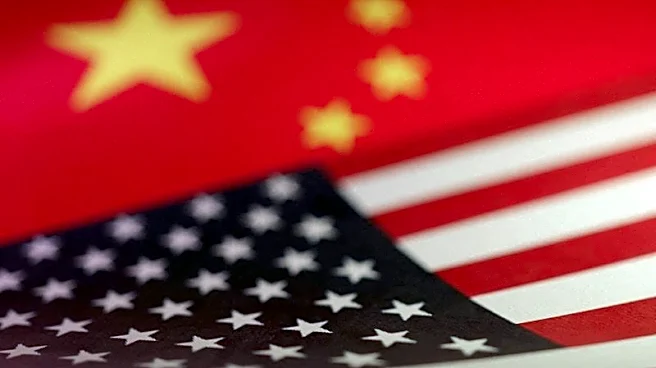
Chinese firms placed on the U.S. Entity List, which restricts their access to specific U.S.-created technologies, have significantly increased their engagement with scientific publications and patenting activities. An analysis of data from 2010 to 2022,
including the China National Intellectual Property Administration (CNIPA) and Web of Science, reveals that sanctioned Chinese companies produced 72.3% more patents citing scientific publications compared to similar unsanctioned firms. Additionally, these sanctioned companies published 33.3% more papers indexed in the China National Knowledge Infrastructure and 85.2% more in Web of Science. This trend suggests that U.S. export controls may have inadvertently spurred greater scientific innovation within these Chinese entities, as they sought alternative avenues for technological advancement. The U.S. government initiated the Entity List in 2018 to safeguard national security amidst rising geopolitical tensions with China.
Why It's Important?
This development highlights potential unintended consequences of U.S. export control policies aimed at limiting China's technological progress. While the U.S. intends to restrict access to critical technologies for national security reasons, the data suggests that these restrictions may be prompting Chinese companies to intensify their domestic research and development efforts. This could lead to China becoming more self-reliant in key technological sectors, potentially diminishing the long-term effectiveness of U.S. sanctions. For U.S. industries, this could mean facing more formidable competition from Chinese firms that have developed their own robust scientific and technological capabilities. Policymakers in the U.S. may need to re-evaluate the broader impact of such controls, considering whether they are achieving their intended goals or inadvertently accelerating China's indigenous innovation. The situation underscores the complex interplay between trade policy, national security, and global technological competition.
What's Next?
The U.S. government will likely continue to monitor the impact of its export controls on Chinese technological development. Future policy decisions may be influenced by ongoing analyses of how Chinese firms adapt to these restrictions. There could be further adjustments to the Entity List or the implementation of new strategies to address the observed increase in Chinese scientific output. U.S. businesses and research institutions may need to prepare for a more scientifically advanced and independent Chinese technological landscape. The findings could also prompt discussions among international allies regarding the efficacy and potential side effects of similar technology control measures. The long-term trajectory of U.S.-China technological competition will depend on how both nations respond to these evolving dynamics.
Beyond the Headlines
The phenomenon of sanctioned entities doubling down on innovation raises broader questions about the efficacy of economic sanctions as a tool for geopolitical influence. While sanctions aim to constrain, they can also act as a powerful catalyst for self-sufficiency and alternative development pathways in targeted nations. This situation could lead to a more fragmented global technological ecosystem, where different regions develop distinct technological standards and supply chains, potentially complicating international collaboration and trade. Ethically, the debate centers on whether the benefits of national security outweigh the potential for accelerating a rival's independent technological growth. Culturally, it may foster a stronger sense of national pride and determination within China to overcome external pressures through scientific advancement.