

What's Happening?
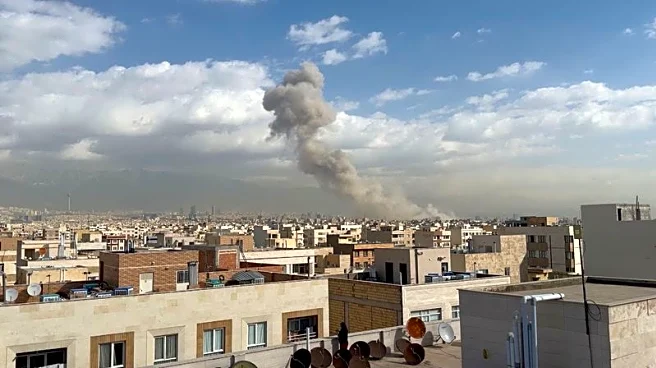
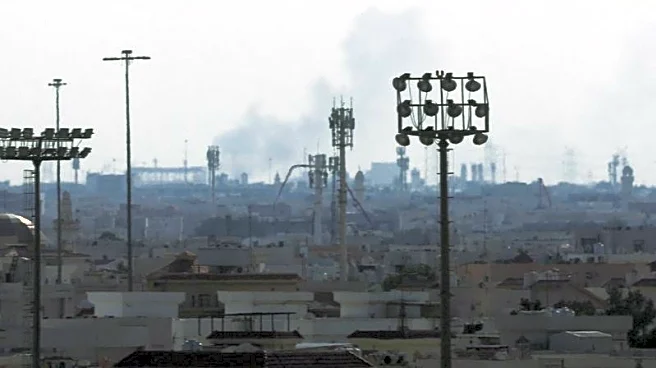
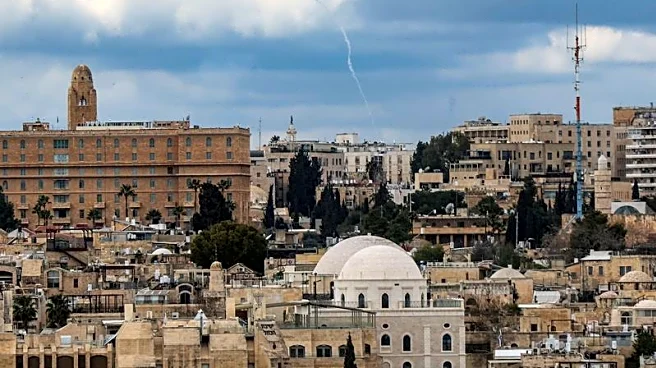
Following joint military strikes by the United States and Israel on Iran, explosions have been reported across the Middle East as Iran retaliates. The strikes targeted Iranian facilities and figures, prompting Iran to launch missile attacks on US and Israeli
bases in the Gulf region. Countries such as Bahrain, Kuwait, Qatar, and the UAE, which host US military bases, confirmed intercepting Iranian missiles. The UAE Ministry of Defense reported successful interception of missiles, while Qatar condemned the attacks as a violation of its sovereignty. The situation has led to heightened security measures, with US embassies advising Americans in the region to shelter in place.
Why It's Important?
The escalation of military actions between the US, Israel, and Iran represents a significant increase in regional tensions, with potential global repercussions. The conflict could disrupt oil supplies, affecting global energy markets and economic stability. The involvement of multiple Gulf states highlights the broader regional implications, as these countries balance their security concerns with diplomatic relations. The situation also poses challenges for international diplomacy, as efforts to de-escalate tensions and prevent further conflict become increasingly urgent.
What's Next?
The international community will likely focus on diplomatic efforts to prevent further escalation and restore stability in the region. The potential for additional military actions or retaliatory strikes remains high, necessitating close monitoring by governments and international organizations. The situation may also prompt discussions on regional security arrangements and the role of external powers in Middle Eastern conflicts. The US and its allies may need to reassess their strategic positions and military presence in the region in response to the evolving threat landscape.