








What's Happening?
Japan is undergoing a significant shift in its tourism strategy for 2026, moving away from simply increasing visitor numbers to creating a more balanced and sustainable tourism system. This new approach aims to spread travelers across different regions,
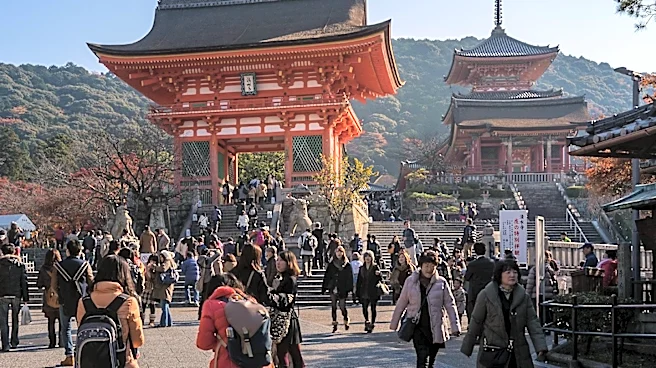
increase visitor spending, protect cultural destinations, and improve the quality of life for local communities. The country has seen record numbers of international visitors, with approximately 42.68 million in 2025, a 15.8% increase from the previous year, and inbound tourism spending reaching around ¥9.45 trillion. While this growth has brought economic opportunities, it has also led to pressure in popular areas like Tokyo, Kyoto, and Osaka, causing concerns about overcrowding, transport strain, and the impact on daily life for residents. To address these issues, Japan is investing in solutions before overtourism becomes a larger problem, focusing on long-term growth management rather than just attraction.
Why It's Important?
This strategic pivot by Japan is important as it sets a new model for global tourism, emphasizing sustainable development over sheer volume. By decentralizing tourism, Japan aims to distribute economic benefits more broadly across smaller cities, rural communities, islands, and regional attractions, rather than concentrating them in a few major hubs. This can lead to stronger local economies and a more equitable distribution of tourism-related income. Furthermore, the focus on protecting cultural and natural sites, improving visitor experiences through technology and better transport planning, and encouraging year-round tourism helps preserve the authenticity and appeal of destinations. This approach could mitigate the negative impacts of overtourism, such as environmental degradation and resident displacement, while ensuring that the tourism industry remains a vital contributor to Japan's economy in a sustainable manner.
What's Next?
Japan's 2026-2030 Tourism Nation Promotion Basic Plan outlines continued ambitions to reach 60 million international visitors and ¥15 trillion in tourism spending by 2030, but with a strong emphasis on quality growth and regional development. A key initiative for 2026 is a government program supporting 58 selected regional projects designed to solve challenges associated with rapid tourism growth. These projects will focus on reducing congestion, improving local transport, managing visitor movement, encouraging responsible travel behavior, supporting regional tourism economies, and protecting cultural and natural sites. The goal is to allow travelers to enjoy destinations while ensuring residents can maintain their comfortable daily lives. This shift suggests that future tourism development in Japan will prioritize thoughtful planning and community integration over unchecked expansion.
Beyond the Headlines
The deeper implication of Japan's new tourism strategy is a redefinition of what constitutes 'success' in the tourism industry. It moves beyond simple visitor counts and revenue figures to incorporate social and environmental well-being. This approach acknowledges that the long-term viability of tourism depends on maintaining a delicate balance between economic gain and the preservation of local culture, environment, and resident quality of life. By proactively addressing overtourism concerns, Japan is setting a precedent for other popular destinations grappling with similar challenges. This could lead to a global shift towards more conscious travel, where destinations and travelers alike prioritize authentic, respectful, and sustainable experiences, ultimately fostering a more resilient and responsible global tourism ecosystem.