







What's Happening?
In Ethiopia's Dasenech Woreda, Village Economic and Social Associations (VESAs) are proving effective in building climate resilience and advancing gender equity within pastoralist communities. These mixed-gender community-based groups combine savings
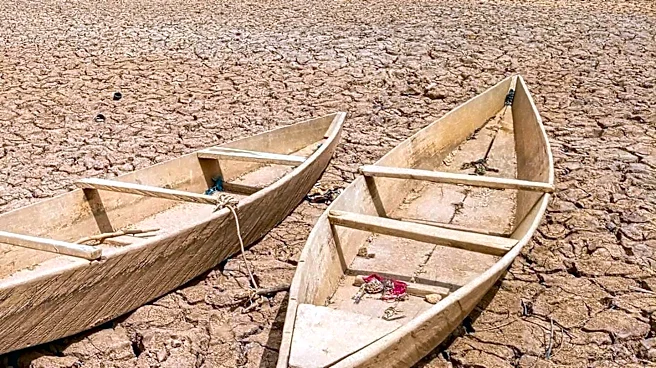
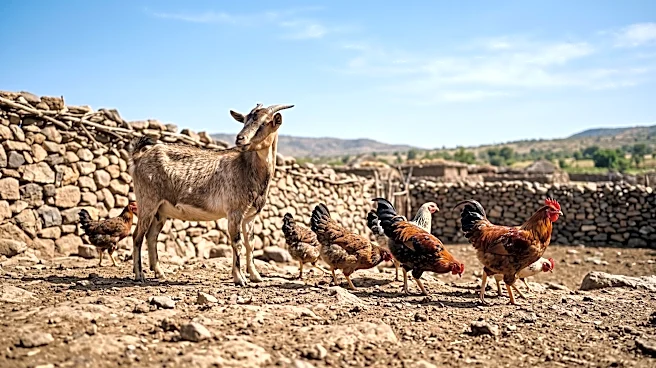
and lending with livelihood support, leadership development, climate information, and community dialogue. The project, implemented by Agri Service Ethiopia, involved 16 VESA groups with 400 members, 53% of whom were women, over 28 months. VESAs have enabled livelihood diversification through activities like poultry production, goat fattening, fishing, and small businesses, helping households spread climate-related risks and improve income security. Women, in particular, have gained greater access to savings, loans, training, and leadership opportunities, holding over 50% of VESA leadership positions. The project also strengthened local climate preparedness by improving access to climate and early warning information, linking Disaster Risk Reduction (DRR) committees to government structures and local radio, and sharing information in local languages.
Why It's Important?
While focused on Ethiopia, this case study offers valuable insights for international development and climate adaptation strategies, including those supported by U.S. foreign aid and non-governmental organizations. The VESA model demonstrates a successful, community-led approach to building resilience in vulnerable populations, which is a critical component of global stability and humanitarian efforts. The integration of gender equity into climate adaptation is particularly significant, as women are often disproportionately affected by climate change but are also powerful agents of change. For the U.S., understanding and potentially supporting such models can enhance the effectiveness of its development assistance, promote sustainable development, and contribute to global efforts to address climate change and poverty. The success of VESAs in improving early warning systems and fostering local leadership can inform best practices for similar initiatives worldwide.
What's Next?
The project's findings suggest that VESAs, when designed as broader social and institutional platforms, can support more equitable, inclusive, and climate-resilient futures. Recommendations for community leaders include supporting VESAs as spaces for inclusive planning and decision-making, encouraging men's participation in discussions on shared household responsibilities, and protecting the legitimacy of women's public and economic participation. Government officials, planners, and policymakers are urged to invest in locally led climate resilience systems, strengthen climate information dissemination, and ensure meaningful participation of women and marginalized groups in DRR committees. Practitioners are advised to use group-based finance as part of a wider transformation strategy, combining savings and loans with leadership support, business training, and work on gender norms. Continued investment in social norms, local institutions, and climate resilience systems is needed for sustained gender-transformative change.
Beyond the Headlines
The VESA approach highlights the profound impact of empowering local communities, particularly women, in addressing complex challenges like climate change and inequality. Beyond economic benefits, the project fostered relational shifts in women's agency, confidence, and participation in household and community decision-making, challenging long-standing gender inequalities. This demonstrates that effective climate adaptation is not solely about technology or infrastructure but also about social transformation and strengthening community governance. The evidence that communities relocated two weeks before a flood due to improved early warning information underscores the life-saving potential of localized, accessible information systems. This model suggests that sustainable development and climate resilience are deeply intertwined with social justice, requiring holistic approaches that address both environmental vulnerabilities and systemic inequalities. The long-term success of such initiatives depends on sustained investment and a commitment to evolving social norms.