


What's Happening?
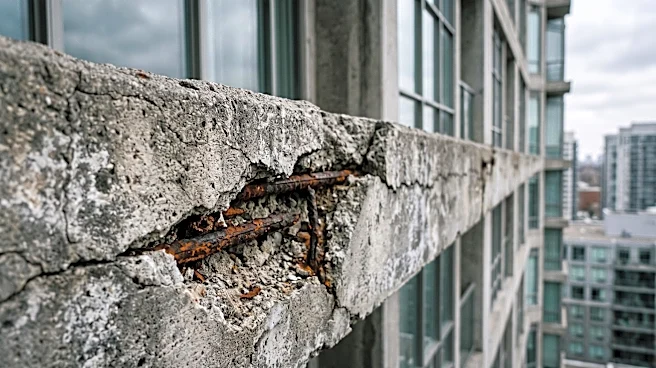
Tenants at a high-rise apartment building in Chicago's River North neighborhood are expressing significant safety concerns regarding the deteriorating condition of their balconies. Residents report that pieces of concrete are falling off, exposing structural
rods. Some balconies have been reinforced with additional rods, while others are completely blocked off with caution tape due to gaping holes. Vinay Naring, a tenant, noted that the situation 'can definitely be better,' while another tenant, Brandon Rubly, described it as 'not ideal.' Mae Whiteside Williams, founder and CEO of CKL Engineers, warned of a worst-case scenario where fractured concrete sections could break loose and fall onto lower balconies or public areas. She also highlighted the issue of rust on the metal, which can expand and further damage the concrete, especially with the threat of a cold, wet winter. The Department of Buildings has reportedly investigated the issue. The building's management company acknowledges the problem and states that the board is aware, but currently, there is no timeline for repairs, as they are seeking a company to undertake the job.
Why It's Important?
This situation highlights critical issues in urban infrastructure maintenance and tenant safety within high-rise residential buildings across the U.S. The potential for falling debris from crumbling balconies poses a direct threat to the lives of residents and the public, raising questions about building safety standards and enforcement. For property owners and management companies, the incident underscores the financial and legal liabilities associated with deferred maintenance, particularly for structural components. The lack of a clear timeline for repairs, despite acknowledged risks, could lead to legal challenges and significant financial burdens for the building's board and management. Furthermore, it could impact property values and the reputation of residential developments in densely populated urban areas like Chicago, potentially influencing future real estate investments and rental markets. This event also brings to light the importance of regular structural inspections and proactive maintenance to prevent such hazardous conditions, which could have broader implications for building codes and tenant protection policies.
What's Next?
Tenants are seeking immediate action to ensure the safety and structural integrity of their balconies. The building's management company is tasked with finding a suitable contractor to address the extensive repairs, a process for which no timeline has been provided. This delay could lead to increased pressure from residents, potentially involving legal action or further intervention from the Department of Buildings. The ongoing safety concerns, especially with the approaching winter, necessitate a swift resolution to prevent potential accidents. The situation may also prompt local authorities to review and potentially strengthen regulations concerning structural maintenance and inspection protocols for high-rise buildings in Chicago. This could lead to more stringent oversight and mandatory repair schedules for similar issues in other properties, impacting building owners and residents city-wide. The outcome of this specific case could set a precedent for how such structural safety issues are handled in urban residential complexes.
Beyond the Headlines
The crumbling balconies in River North reveal a deeper systemic challenge within the U.S. urban landscape: the aging infrastructure of residential buildings and the complexities of maintaining them. This issue extends beyond individual buildings, pointing to a broader need for robust regulatory frameworks and enforcement mechanisms to ensure long-term structural integrity and public safety. The financial implications of such repairs can be substantial, often leading to disputes between building boards, management, and tenants over responsibility and cost. This incident could trigger a re-evaluation of how maintenance funds are allocated and managed in condominium and apartment associations. Ethically, the delay in addressing a known safety hazard raises questions about the duty of care owed by property managers and owners to their residents. Culturally, it may foster a greater awareness among tenants about their rights and the importance of advocating for safe living conditions, potentially leading to increased tenant activism and demands for transparency in building management.