



What's Happening?
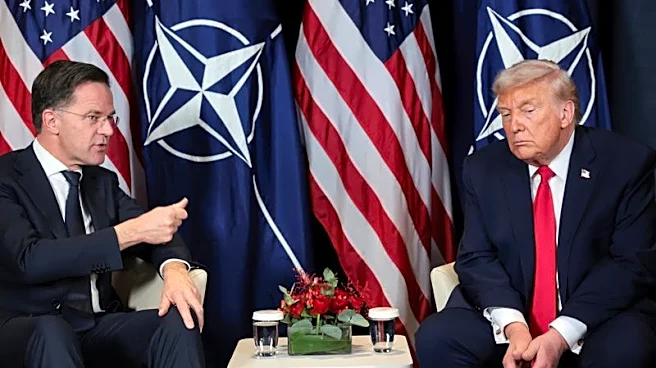
President Donald Trump and Secretary of State Marco Rubio have raised concerns about the current role and effectiveness of NATO, particularly in light of Operation Epic Fury against Iran. They argue that NATO has become a lopsided arrangement where the United
States shoulders the majority of defense spending and military capabilities, while European allies under-invest in their own defense. This imbalance has led to questions about the alliance's relevance, especially as some European countries have restricted U.S. military operations during critical moments. The original mission of NATO, established in 1949 to counter the Soviet Union, is seen as outdated, prompting calls for a reevaluation of its purpose in the modern geopolitical landscape.
Why It's Important?
The questioning of NATO's role by U.S. leaders highlights a significant shift in American foreign policy priorities. If NATO's purpose is not redefined, the U.S. may reconsider its involvement, which could lead to a restructuring of global defense alliances. This could impact U.S. relations with European countries and alter the balance of power in international security. The emphasis on bilateral and trilateral partnerships, as demonstrated by the U.S.-Israel cooperation against Iran, suggests a move towards more focused and accountable alliances. This shift could redefine how the U.S. engages with global partners and addresses security threats.
What's Next?
The future of NATO may involve significant changes if the U.S. decides to alter its commitment to the alliance. European countries might need to increase their defense spending and capabilities to maintain the alliance's relevance. Additionally, NATO may need to redefine its mission to address contemporary threats such as terrorism and cyber warfare. The U.S. could pursue more strategic partnerships outside of NATO, focusing on specific regional threats and interests. These developments could lead to a new era of international relations, where traditional alliances are replaced by more dynamic and interest-driven partnerships.
Beyond the Headlines
The debate over NATO's purpose also touches on broader themes of national sovereignty and self-interest. As countries prioritize their own security and economic interests, multilateral organizations like NATO may face challenges in maintaining cohesion and effectiveness. This shift towards nationalism and bilateralism could influence global governance structures and international cooperation. The reevaluation of NATO's role may also prompt discussions on the ethical implications of defense spending and military interventions, as countries balance their national interests with global responsibilities.