


What's Happening?
Brian J. Smith, a former Supervisory Special Agent with the U.S. Department of the Treasury, United States Customs Service, is advocating for a rigorous retrospective examination of the decision to reorganize the U.S. Customs Service after the September
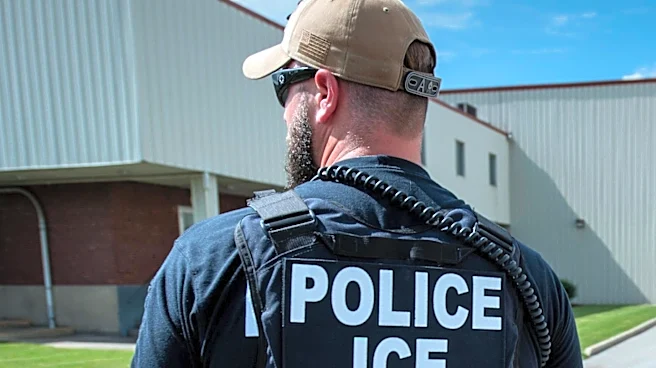
11, 2001, terrorist attacks. The 9/11 attacks prompted a fundamental reassessment of homeland security, leading to the creation of the Department of Homeland Security (DHS) in 2002. On March 1, 2003, approximately 180,000 personnel from 22 organizations were integrated into the new department. However, the U.S. Customs Service was not transferred intact; its inspection, investigative, trade, and enforcement capabilities were divided among various new organizations within DHS. Smith argues that while the patriotism and competence of current DHS personnel are not in question, the organizational architecture implemented in 2003 needs to be evaluated to determine if it preserved the institutional knowledge, specialized authorities, professional culture, mission coherence, and accountability that the Customs Service had developed over more than two centuries.
Why It's Important?
This call for reassessment is important because it questions the effectiveness of a major governmental restructuring undertaken in response to a national crisis. The 9/11 Commission identified significant failures in intelligence collection, analysis, coordination, and information sharing across the national-security apparatus. The subsequent reorganization aimed to address these shortcomings by consolidating various agencies under DHS. However, if the fragmentation of the U.S. Customs Service's functions led to a loss of critical institutional capabilities, it could have long-term implications for border security, trade enforcement, and the overall effectiveness of homeland defense. A thorough review could reveal whether the current structure is optimized to handle evolving threats or if it inadvertently created new vulnerabilities by disrupting established expertise and operational coherence. The outcome of such an examination could influence future organizational reforms within the U.S. government, particularly in areas critical to national security.
What's Next?
If Smith's call for a retrospective examination gains traction, it could lead to congressional hearings or an independent commission tasked with evaluating the post-9/11 reorganization of the U.S. Customs Service. Such an examination would likely involve analyzing historical data, interviewing former and current personnel, and assessing the performance of the fragmented functions within DHS. Depending on the findings, there could be recommendations for further restructuring, consolidation, or re-empowerment of certain agencies to restore lost capabilities. This could also spark a broader debate about the optimal balance between centralized control and specialized agency autonomy within the federal government. Political leaders, particularly those focused on national security and economic policy, might engage in discussions about how to best leverage institutional knowledge and expertise to protect the homeland while ensuring efficient trade and enforcement.
Beyond the Headlines
The debate over the U.S. Customs Service reorganization delves into the complex interplay between crisis response, bureaucratic reform, and institutional memory. The immediate aftermath of a major event like 9/11 often leads to rapid, sweeping changes, but the long-term consequences of these changes may not be fully understood for years. This situation highlights the ethical and practical challenges of dismantling long-standing, effective agencies in favor of new, consolidated structures. It raises questions about whether the pursuit of a unified front against terrorism inadvertently weakened other vital governmental functions. The discussion also touches upon the cultural dimension of government agencies, where a professional culture and mission coherence, built over centuries, can be difficult to replicate or transfer. Understanding these deeper implications is crucial for ensuring that future responses to national crises are both effective and sustainable, avoiding unintended negative consequences on critical governmental capabilities.