




What's Happening?
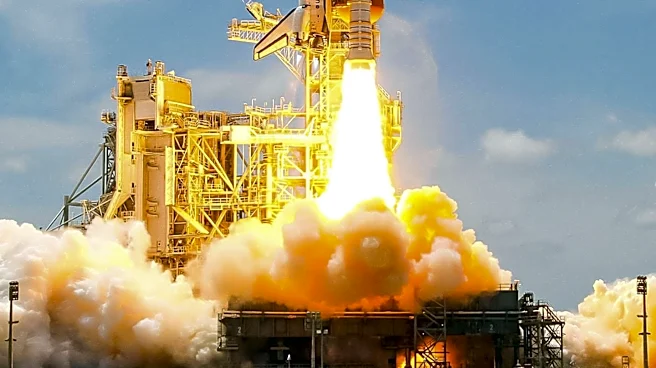
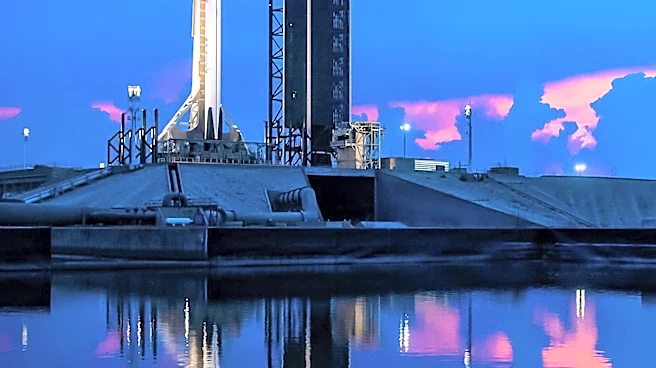
NASA is preparing to launch the Nancy Grace Roman Space Telescope from the Kennedy Space Center in Florida on August 30, 2026. The telescope, named after NASA's first chief astronomer, will offer a panoramic view of the cosmos, significantly larger than
that of the Hubble Space Telescope. This mission aims to revolutionize the understanding of the universe by unveiling celestial objects and phenomena that are currently unseen. A media briefing is scheduled for July 29, 2026, to provide an overview of the mission and its status. Key participants include Shawn Domagal-Goldman, Jackie Townsend, Julie McEnery, and Jeremy Perkins from NASA. The Roman telescope will also test advanced technology for imaging planets around nearby stars, contributing to NASA's search for extraterrestrial life.
Why It's Important?
The launch of the Nancy Grace Roman Space Telescope is a significant milestone for astrophysics and space exploration. By providing a field of view 100 times larger than the Hubble, it will enable deep cosmic surveys and enhance the understanding of the universe's mysteries. This mission supports NASA's broader goals of exploring the cosmos and searching for life beyond Earth. The telescope's ability to directly image planets around nearby stars represents a critical step in identifying potentially habitable worlds. The collaboration with international partners like ESA, JAXA, and CNES underscores the global effort in advancing space science and technology.
What's Next?
Following the media briefing, NASA will continue preparations for the telescope's launch. The mission will involve collaboration with various research institutions and industrial partners. The Roman telescope's deployment will mark the beginning of a new era in cosmic exploration, with expectations of groundbreaking discoveries. The scientific community and the public will closely follow the mission's progress and findings, which could influence future space exploration strategies and technologies.