




What's Happening?
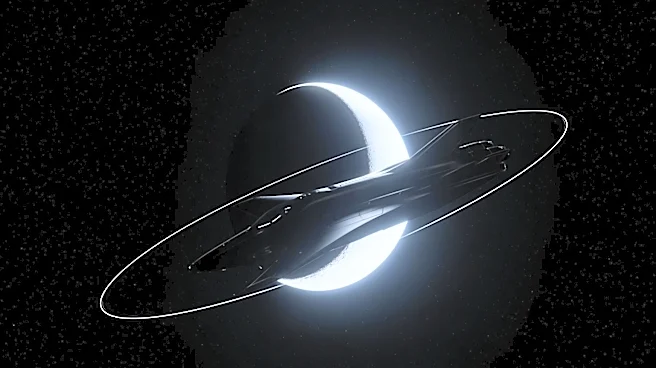
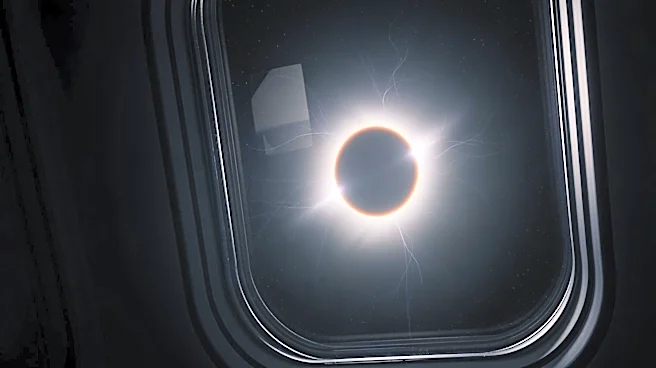
NASA's Artemis II mission, currently on a journey around the Moon, has captured remarkable images of a total solar eclipse from deep space. The crew, consisting of four astronauts, witnessed the eclipse while positioned beyond the Moon, offering a unique
perspective not visible from Earth. The images reveal the Moon's uneven edges and the Sun's corona, visible without atmospheric interference. This mission marks a significant milestone in space exploration, as the Artemis II crew has set a new record for the farthest distance traveled from Earth by humans, reaching 252,756 miles.
Why It's Important?
The Artemis II mission is a critical step in NASA's efforts to advance human space exploration. By capturing images of a solar eclipse from deep space, the mission provides valuable scientific data and enhances our understanding of celestial events. The mission's success demonstrates the potential for future deep space exploration, paving the way for more ambitious missions, including potential manned missions to Mars. The international collaboration involved in Artemis II also highlights the importance of global partnerships in advancing space exploration and scientific discovery.
What's Next?
As Artemis II continues its journey, the crew is expected to conduct further experiments and observations. The mission's success will inform future Artemis missions, including Artemis III, which aims to land astronauts on the Moon. The data collected will be crucial for planning long-duration space missions and developing technologies for sustainable human presence on the Moon and beyond. NASA's continued focus on deep space exploration will likely lead to increased investment and interest in space science and technology.