




What's Happening?
The San Diego Zoo Wildlife Alliance, in collaboration with the University of California, Davis Wildlife Health Center, and the California Department of Fish and Wildlife, successfully rescued three mountain lion cubs after their mother, F307, died following
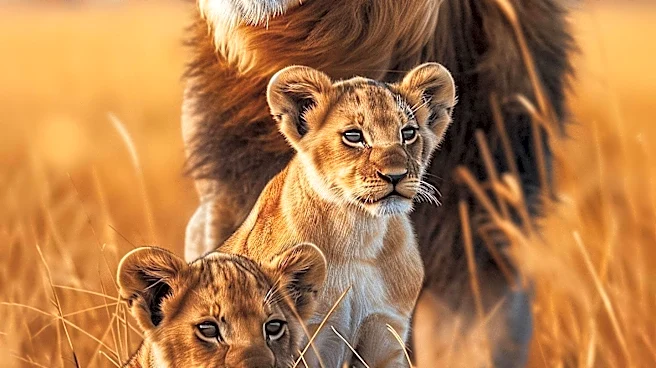
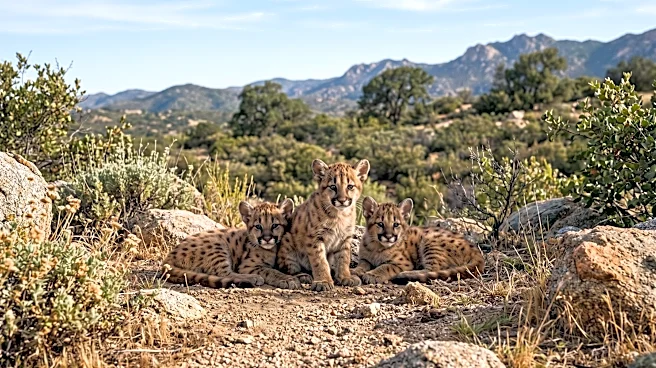
contact with people. Researchers had been monitoring F307 using a GPS collar and noticed her repeatedly visiting a specific site within the 1800-acre Wildlife Biodiversity Reserve at the San Diego Zoo Safari Park. This pattern led them to hypothesize that she had cubs hidden there. After F307's death, a week-long search operation was launched to locate the cubs, who were in critical danger without their mother's protection and milk. The cubs, named Hemuk, Teoye, and Pike (meaning three, zero, and seven in the Kumeyaay language, honoring their mother's designation), were found dehydrated and brought to the veterinary hospital for care. Due to their young age and lack of survival skills learned from their mother, they could not be reintroduced into the wild and have since found a permanent home at the safari park.
Why It's Important?
This rescue highlights the critical role of wildlife conservation efforts and inter-organizational collaboration in protecting vulnerable species in the U.S. The incident underscores the challenges faced by mountain lions, a keystone species, as human populations expand into their habitats. The death of F307 due to human interaction and the subsequent need to rescue her cubs illustrate the direct impact of human presence on wildlife. Mountain lions are vital for maintaining healthy ecosystems by controlling animal populations, and their decline can have cascading effects on biodiversity. The decision to provide the cubs with a permanent home at the safari park, rather than reintroducing them, emphasizes the importance of early maternal learning for survival in the wild and the ethical considerations involved in wildlife rehabilitation. This effort also showcases how advanced tracking technology, like GPS collars, is instrumental in conservation and rescue operations.
What's Next?
The San Diego Zoo Wildlife Alliance and its partners will continue their efforts in wildlife monitoring, research, and public education regarding mountain lions. The story of Hemuk, Teoye, and Pike will likely be used to raise awareness about human-wildlife coexistence and the importance of supporting conservation organizations. Educational initiatives will focus on advising the public on how to safely interact with mountain lions, such as giving them space, making noise while hiking, and securing food at campsites. For the rescued cubs, their future involves thriving as adult mountain lions within the protected environment of the safari park, serving as ambassadors for their species. Ongoing research into mountain lion behavior, habitat use, and the impacts of human encroachment will inform future conservation strategies and policy decisions aimed at protecting these animals in their natural habitats.
Beyond the Headlines
The narrative of the orphaned mountain lion cubs extends beyond a simple rescue story, touching upon the broader implications of human expansion and its ecological footprint. The naming of the cubs using the Kumeyaay language subtly acknowledges the indigenous connection to the land and its wildlife, hinting at a more holistic approach to conservation that integrates cultural heritage. The fact that the cubs could not be returned to the wild due to a lack of learned survival skills from their mother underscores the profound and often irreplaceable role of parental guidance in the natural world. This situation prompts reflection on the long-term consequences of disrupting natural family structures and the ethical dilemmas faced by conservationists when intervention becomes necessary. It also highlights the increasing reliance on human intervention and technological solutions to mitigate the negative impacts of human activity on wildlife, raising questions about the sustainability of such approaches in the face of ongoing habitat loss and human-wildlife conflict.