




What's Happening?
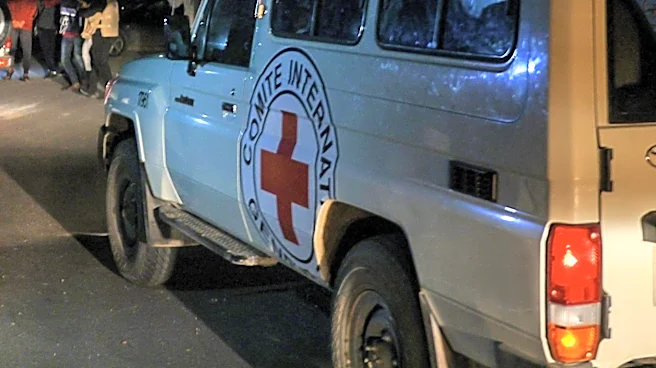
The International Committee of the Red Cross (ICRC), alongside organizations like the U.S. Department of Homeland Security and the UNDRR, is adopting playful methods for disaster preparedness and climate resilience. This approach involves using games
and interactive activities to educate individuals and communities on how to respond to potential disasters. The ICRC's involvement aligns with a broader shift in humanitarianism towards 'anticipatory action,' which focuses on acting ahead of predicted hazards to mitigate their impact before they fully unfold. This strategy aims to move beyond traditional emergency response by proactively engaging communities in readiness. The ICRC's efforts are part of a global trend where institutions are exploring innovative ways to encourage preparedness, recognizing that conventional methods often fall short in motivating public engagement.
Why It's Important?
This shift towards 'playful preparedness' by the ICRC and other major organizations is significant because it addresses a critical gap in disaster readiness: public engagement and retention of preparedness knowledge. Traditional educational methods often struggle to instill a lasting sense of urgency or practical skills in individuals. By making preparedness interactive and engaging, these initiatives can increase participation, improve understanding, and foster a more proactive mindset towards potential crises. This is particularly crucial in the U.S., where various regions are susceptible to different types of natural disasters, from hurricanes to wildfires. Enhanced community preparedness can lead to reduced casualties, less property damage, and a more resilient society, ultimately lessening the burden on emergency services and post-disaster recovery efforts. The adoption of such methods by influential bodies like the ICRC also legitimizes and promotes these innovative educational strategies on a global scale.
What's Next?
The ICRC and its partners are expected to continue developing and implementing playful preparedness programs, potentially expanding their reach and refining their methodologies based on feedback and effectiveness. This could involve creating new games, simulations, and interactive workshops tailored to specific regional risks and demographics. There may also be increased collaboration between humanitarian organizations, government agencies, and educational institutions to integrate these playful approaches into broader disaster risk reduction strategies. Furthermore, research into the long-term impact and efficacy of playful preparedness is likely to grow, providing data to further optimize these initiatives. The success of these programs could also inspire other sectors to adopt similar innovative educational techniques for complex societal challenges.
Beyond the Headlines
The embrace of playful preparedness by the ICRC highlights a deeper understanding of human psychology in crisis response. It acknowledges that fear-based or purely informational approaches can be less effective than experiential learning that fosters creativity and problem-solving in a low-stress environment. This method encourages individuals to view everyday objects as potential resources and to develop improvisational skills, which are crucial during unexpected events. Ethically, it empowers communities by shifting them from passive recipients of aid to active participants in their own safety. Legally, it could influence policy-making to support more innovative and community-centric preparedness funding. Culturally, it promotes a proactive, resilient mindset, potentially leading to a societal shift where preparedness is seen not as a chore, but as an engaging and empowering aspect of civic responsibility.