







What's Happening?
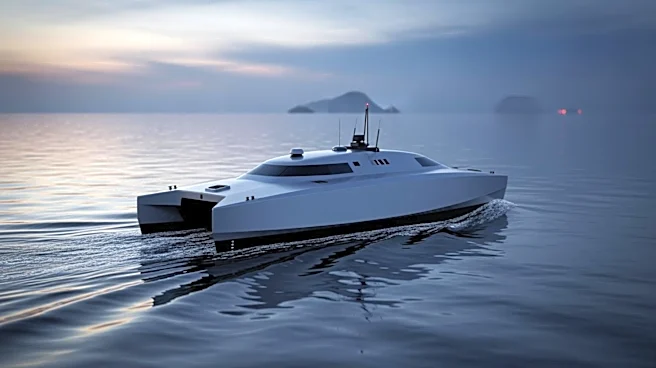
The U.S. Navy has decided to pivot from its existing unmanned surface vehicle (USV) program, opting instead for a strategy that focuses on already developed or in-progress technologies. This decision comes after the cancellation of the Modular Attack
Surface Craft (MASC) program, which was deemed ineffective due to its limited range and vulnerability in wargames. The Navy's new approach involves a marketplace format, allowing defense tech companies to propose existing technologies for evaluation. This shift aims to streamline the acquisition process and focus on mature technologies that meet the Navy's operational needs.
Why It's Important?
The Navy's decision to change its USV strategy reflects a broader trend in military procurement towards leveraging existing technologies to meet operational demands. This approach could lead to faster deployment of effective solutions and reduce the risks associated with developing new prototypes. For defense contractors, the shift presents both opportunities and challenges, as companies must adapt to the new marketplace format and demonstrate the viability of their technologies. The move also highlights the Navy's commitment to enhancing its capabilities in unmanned systems, which are increasingly important in modern naval warfare.
What's Next?
The Navy's new solicitation for USVs will likely attract a diverse range of companies, from startups to established defense contractors. The focus on mature technologies may accelerate the integration of USVs into the fleet, enhancing the Navy's operational capabilities. However, the high upfront costs associated with the new solicitation could limit participation to companies with significant financial backing. The Navy's engagement with venture capitalists and tech investors may help address this challenge by fostering competition and innovation in the defense sector.