







What's Happening?
BioOrbit, a biotech company, is developing technology for manufacturing pharmaceutical crystals in microgravity, aiming to transform cancer treatment. The company's goal is to create highly concentrated drug formulations in space that could enable patients
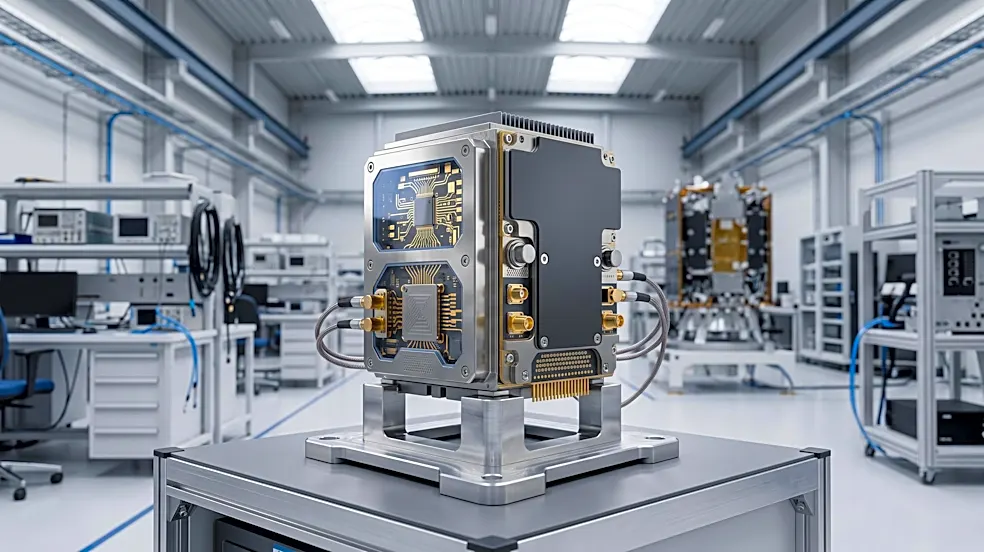
to self-administer medicines, similar to insulin injections, instead of requiring intravenous hospital visits. By leveraging microgravity, BioOrbit can produce protein crystals with unique characteristics that are difficult to achieve on Earth, offering pharmaceutical companies greater control over drug delivery and release in the body. The company's manufacturing unit, roughly the size of a microwave, is designed for efficiency in space, focusing on crystallizing proteins in orbit and then returning them to Earth for final drug production. BioOrbit has already conducted a mission on the International Space Station, securing funding and beginning to hire staff after its founder, Katie King, started the company in 2023.
Why It's Important?
This development holds significant implications for the pharmaceutical industry and patient care in the U.S. and globally. If successful, BioOrbit's technology could revolutionize drug administration, making treatments more accessible and convenient for cancer patients by shifting from hospital-based intravenous infusions to at-home injections. This could reduce healthcare costs, alleviate the burden on medical facilities, and improve patients' quality of life. The ability to produce superior drug crystals in microgravity could also lead to the development of more effective and precisely controlled medications. Furthermore, BioOrbit's work highlights the growing potential of the commercial space industry beyond exploration, positioning space as a viable manufacturing environment for high-value products, particularly in biotechnology and medicine. This could spur further investment and innovation in space-based industrial processes.
What's Next?
BioOrbit plans to conduct further flights and tests to map out the full potential of its platform, testing a range of different drugs beyond cancer treatments. The company aims to establish a steady pipeline of pharmaceutical partners' drugs flowing through its system, with the ultimate goal of having a permanent presence in space for medicine production within the next decade. This will involve making deals with drug companies and scaling up operations. BioOrbit also sees potential in using microgravity for creating organoids, tiny versions of organs used for disease study and drug testing, which could lead to more accurate predictions of medicine efficacy in clinical trials. The company anticipates that as launch and re-entry infrastructure expands and costs decrease, more scientists and entrepreneurs will explore new applications for microgravity manufacturing.
Beyond the Headlines
BioOrbit's venture into space-based pharmaceutical manufacturing raises profound ethical and economic questions. The concept of manufacturing essential medicines off-Earth could introduce new complexities regarding supply chain resilience, intellectual property, and regulatory oversight. While offering significant benefits, it also necessitates robust international frameworks to ensure equitable access and safety. Culturally, it shifts the perception of space from a frontier of exploration to a domain of industrial production, potentially inspiring a new generation of 'space industrialists.' The long-term implications include the potential for entirely new industries to emerge around microgravity manufacturing, creating jobs and driving technological advancements. This also underscores the increasing convergence of disparate fields like aerospace, biotechnology, and healthcare, pushing the boundaries of what is considered possible in medicine and manufacturing.