


What's Happening?
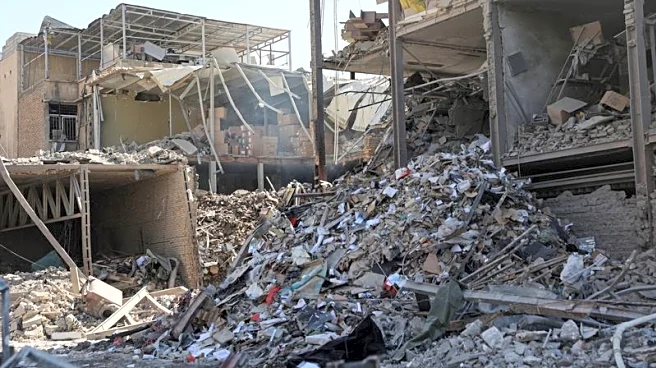
Iran has postponed a ceremony to commemorate the late Supreme Leader Ayatollah Ali Khamenei, who was recently assassinated in joint air strikes by Israel and the United States. The delay, reported by Iran's Tasnim news agency, is attributed to logistical
issues, including requests from various provinces to attend the event. The farewell ceremony was initially scheduled to take place at Tehran's Imam Khomeini Prayer Hall. Khamenei, who had been Iran's supreme leader since 1989, was killed at the age of 86. The Assembly of Experts, responsible for appointing the new supreme leader, is in the process of selecting Khamenei's successor. Israel's Defense Minister, Israel Katz, has threatened to assassinate any leader chosen to succeed Khamenei, citing concerns over Iran's intentions towards Israel and the United States.
Why It's Important?
The assassination of Ayatollah Khamenei and the subsequent threats from Israel highlight the ongoing tensions between Iran and Israel, as well as the broader geopolitical implications for the region. The selection of a new supreme leader is a critical moment for Iran, as this individual will wield significant influence over the country's political, military, and religious affairs. The threats from Israel could further escalate tensions and potentially lead to increased instability in the Middle East. The situation also poses challenges for U.S. foreign policy, as the U.S. has been involved in the air strikes and has a vested interest in the outcome of Iran's leadership transition.
What's Next?
The Assembly of Experts is expected to continue the process of selecting a new supreme leader, with Khamenei's son, Mojtaba Khamenei, among the top contenders. The international community will be closely monitoring the situation, as the choice of successor could have significant implications for regional stability and international relations. Israel's threats may lead to heightened security measures and potential retaliatory actions from Iran. The U.S. and other global powers may also engage in diplomatic efforts to manage the situation and prevent further escalation.