



What's Happening?
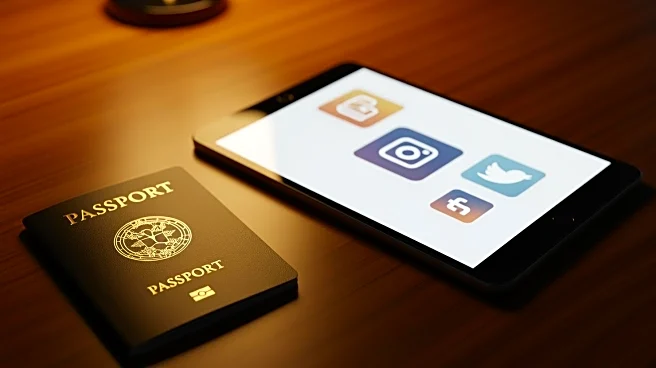
The Trump administration is proposing a new requirement for travelers from 42 countries under the visa waiver program to submit their social media activity from the past five years for review. This proposal, filed by the U.S. Customs and Border Protection,
aims to enhance security measures for those applying for electronic travel authorization, which allows visitors to stay in the U.S. for up to 90 days without a visa. Currently, applicants must provide basic contact information and pay a fee. The new requirement would add the submission of personal and business phone numbers, email addresses, and family details. The proposal has faced criticism from First Amendment advocates who argue it could lead to self-censorship and undermine the U.S.'s commitment to free speech.
Why It's Important?
This proposal could significantly impact international travel to the U.S., especially as it coincides with the upcoming World Cup, which is expected to draw thousands of foreign visitors. The requirement for social media scrutiny raises concerns about privacy and freedom of expression, potentially deterring tourists and business travelers. Critics argue that such measures could damage the U.S.'s reputation as a champion of free speech and open society. The policy could also set a precedent for other countries to impose similar requirements on American travelers, affecting global travel norms and international relations.
What's Next?
If implemented, the new requirement is expected to take effect early next year. The proposal is likely to face legal challenges from civil liberties groups, which could delay or alter its implementation. The administration may also need to address concerns from international partners and tourism stakeholders who fear the impact on travel and economic relations. Ongoing discussions and potential revisions to the proposal will be crucial in determining its final form and acceptance.