


What's Happening?
U.S. Senators are working on a proposal to fund the Department of Homeland Security (DHS) while excluding Immigration and Customs Enforcement (ICE) enforcement operations. This proposal aims to end the ongoing shutdown of DHS, which has resulted in significant
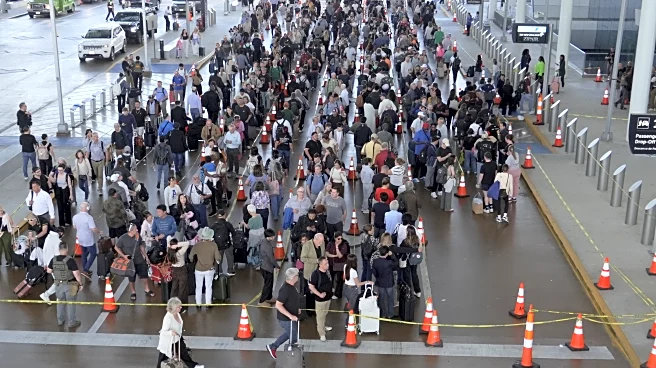
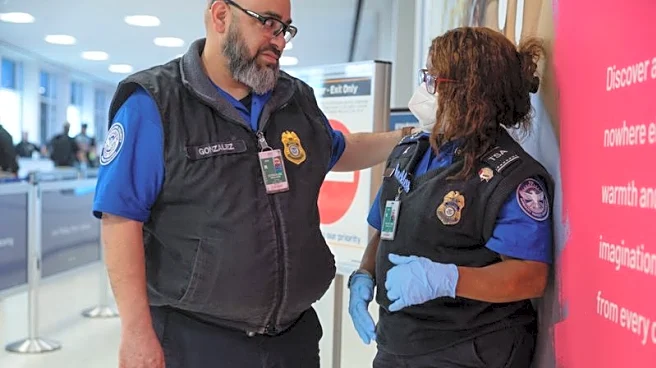
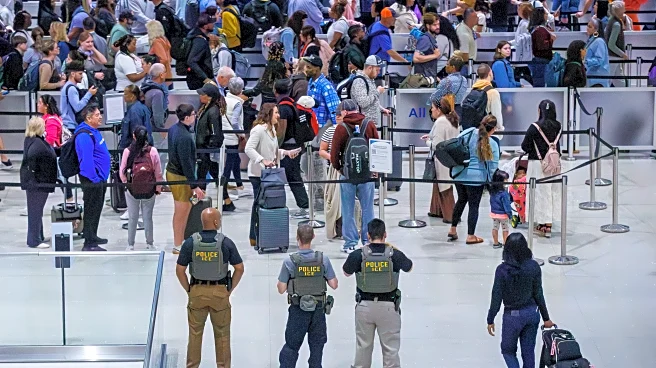
disruptions at U.S. airports due to unpaid Transportation Security Administration (TSA) workers. The shutdown began over a month ago, and the proposal seeks to address the core dispute over ICE's role in immigration enforcement. The plan includes funding for TSA and Customs and Border Protection, with new restrictions on ICE operations, such as requiring body cameras and identification for officers.
Why It's Important?
The proposed funding deal is crucial as it addresses the operational challenges faced by DHS and aims to alleviate the impact of the shutdown on airport security and travelers. By excluding ICE enforcement operations, the proposal attempts to navigate the contentious political landscape surrounding immigration policies. The outcome of this proposal could influence future immigration enforcement strategies and set a precedent for how DHS funding is negotiated. The deal's success or failure will have significant implications for airport operations, public safety, and the broader debate on immigration policy in the U.S.
What's Next?
If the proposal gains traction, it could lead to a swift resolution of the DHS shutdown, restoring normal operations at airports and providing relief to TSA workers. However, the proposal must first be approved by both the Senate and the House, where it may face opposition from lawmakers with differing views on immigration enforcement. The ongoing negotiations will be closely watched by political leaders, civil society groups, and the public, as they could shape the future of U.S. immigration policy and DHS operations. The proposal's progress will also be a test of bipartisan cooperation in addressing complex policy issues.