




What's Happening?
Florida is facing a growing challenge in meeting its electricity needs, despite being the second-largest electricity producer in the U.S. The state relies on additional power from the regional grid, a dependency that has been decreasing over the past
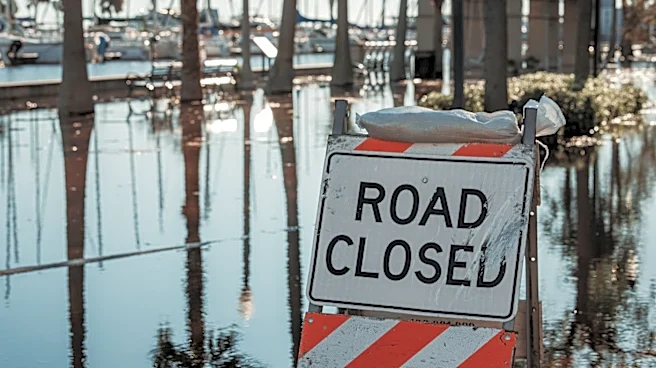
decade. However, with U.S. electricity demand projected to grow significantly by 2035, Florida's reliance on external power sources is becoming more critical. The state is heavily dependent on natural gas, which fuels about 75% of its electricity generation, making it vulnerable to supply disruptions. Additionally, Florida experiences frequent hurricanes, leading to annual power outages. To address these challenges, there is an increasing focus on utility-scale solar energy and property-level resilience measures, such as backup generators and electric vehicle (EV) chargers. These measures are being adopted by residents and businesses to ensure power reliability during storm seasons.
Why It's Important?
The situation in Florida highlights the broader issue of energy reliability in storm-prone regions. As electricity demand continues to rise, the state's reliance on natural gas and external power sources poses a risk to its energy security. The adoption of solar energy and backup power solutions is crucial for enhancing resilience against natural disasters. This shift from reactive to planned energy management reflects a growing trend among consumers to take control of their power reliability. For grid planners, understanding these property-level resilience decisions is essential for accurately forecasting demand and ensuring a stable energy supply. The developments in Florida serve as a case study for other regions facing similar challenges, emphasizing the need for diversified energy sources and infrastructure improvements.
What's Next?
As Florida continues to grapple with its energy challenges, further investments in renewable energy and grid modernization are expected. The state may also explore additional measures to reduce its dependency on natural gas and enhance its energy resilience. For grid planners and policymakers, tracking the adoption of property-level resilience measures will be crucial in shaping future energy strategies. Additionally, the increasing demand for EV chargers and backup generators indicates a shift towards more sustainable and self-reliant energy solutions. These trends are likely to influence energy policies and infrastructure development in Florida and other storm-exposed regions.