



What's Happening?
In the UK, a shift in national and local planning policies is paving the way for the redevelopment of golf courses into sustainable community hubs. This change is driven by the need to address the acute housing shortage, particularly for affordable homes.
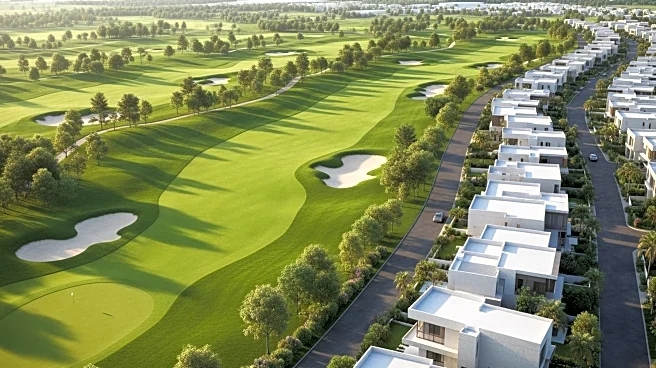
The National Planning Policy Framework was revised to introduce the concept of 'Grey Belt,' allowing for development in areas previously designated as Green Belt if they meet certain criteria. This includes providing affordable housing, infrastructure improvements, and public access to green spaces. Carter Jonas, a UK property consultancy, has successfully obtained planning permission for such a redevelopment, transforming a golf club into a site with over 200 new homes, a GP surgery, a café, play areas, and a country park. This approach aims to balance housing needs with environmental and community considerations.
Why It's Important?
The redevelopment of golf courses under the new 'Grey Belt' policy could significantly impact the UK's housing market by providing much-needed homes in sustainable locations. This policy shift addresses the pressing issue of housing shortages while also promoting community infrastructure and biodiversity improvements. For golf clubs, this presents an opportunity to secure financial stability and adapt to changing economic conditions. The policy also encourages the creation of new community spaces and green corridors, enhancing public access to nature. However, it raises questions about the future of golf courses and their role in communities, as some may need to reduce their footprint or diversify their offerings to remain viable.
What's Next?
As the policy continues to be implemented, more golf courses may be considered for redevelopment, particularly in areas with high housing demand. Local planning authorities will need to carefully weigh housing needs against leisure and environmental considerations. The Greater London Authority is conducting a comprehensive Green Belt Review, which could lead to further policy adjustments. Golf clubs may explore reducing their course sizes or diversifying their facilities to align with new planning frameworks. The ongoing dialogue between policymakers, developers, and communities will be crucial in shaping the future landscape of golf course redevelopment.
Beyond the Headlines
The shift towards policy-led golf course redevelopment highlights broader trends in urban planning and land use. It reflects a growing recognition of the need to balance development with environmental sustainability and community well-being. This approach could serve as a model for other regions facing similar challenges. Additionally, it underscores the importance of flexible land use policies that can adapt to changing societal needs. The integration of leisure, housing, and green spaces in redevelopment projects could lead to more resilient and inclusive communities.