




What's Happening?
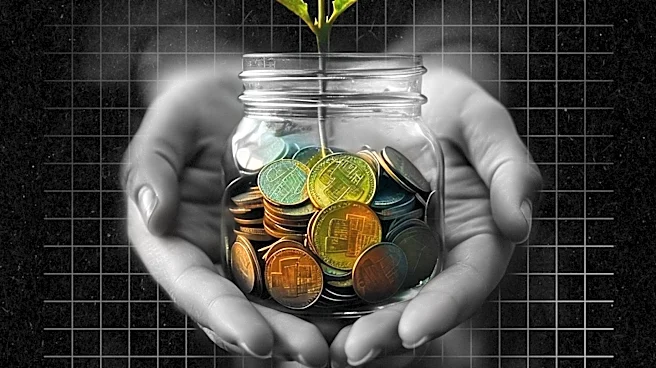
The COP30 Presidency has released a new report, 'Implementing the Baku to Belém Roadmap to 1.3T,' which outlines concrete financial pathways and policy interventions aimed at scaling external climate finance for developing countries to between US$1.27
and US$1.41 trillion annually by 2035. This report builds on the Baku to Belém Roadmap to 1.3T, which was jointly presented by the COP29 and COP30 Presidencies in November 2025. The 2026 report identifies six crucial sources for achieving this financial goal: concessional finance, private investments, South-South cooperation, Special Drawing Rights channeling, innovative mechanisms, and carbon markets. The report highlights that under a business-as-usual scenario, international climate finance would only reach US$458 to US$461 billion per year by 2035, underscoring the need for significant action from governments, financial institutions, and investors. To facilitate monitoring and implementation, the report introduces the Climate Finance Action Compass and the 5x5 Implementation Framework.
Why It's Important?
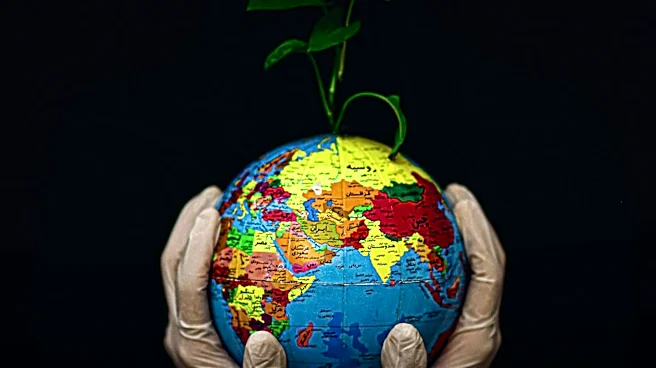
The report's findings are critical for addressing the substantial climate finance gap faced by developing countries, which are often the most vulnerable to climate change impacts but have limited resources for mitigation and adaptation. Mobilizing over US$1.3 trillion annually by 2035 is essential to enable these nations to transition to low-carbon economies and build resilience against climate-related disasters. The emphasis on a diverse range of financial sources, including private sector involvement, signifies a recognition that traditional public funding alone is insufficient. For the U.S., this initiative has implications for its role in international climate diplomacy, its foreign aid commitments, and opportunities for U.S. businesses in green technology and sustainable infrastructure development in emerging markets. The success of these efforts could also contribute to global stability and reduce potential future costs associated with climate-induced migration and humanitarian crises.
What's Next?
The report is intended to serve as a key reference for accelerating climate finance implementation, particularly in preparation for the second Global Stocktake of the Paris Agreement at COP31 in Antalya, Türkiye. The COP30 Presidency is advocating for enhanced cooperation among various stakeholders, including governments, multilateral financial institutions, regulators, investors, and civil society, to ensure the effective implementation of the proposed financial pathways. The newly introduced 5x5 Implementation Framework and the Climate Finance Action Compass will be instrumental in tracking progress and identifying areas where further intervention is needed. Future international climate negotiations will likely focus on translating these frameworks into tangible actions and securing concrete commitments from all parties to meet the ambitious financial targets. The report also aligns with other COP30 roadmaps on fossil fuel transition and deforestation, indicating a comprehensive approach to global climate challenges.
Beyond the Headlines
The report's detailed financial pathways underscore the complex interplay between climate policy, economic development, and international cooperation. The significant gap between current climate finance levels and the projected needs highlights the systemic challenges in reorienting global capital towards sustainable investments. The inclusion of innovative mechanisms and carbon markets as key sources suggests a growing recognition of market-based solutions, which could lead to new financial instruments and investment opportunities. However, ensuring equitable access to these funds and preventing potential 'greenwashing' or maladaptation will be crucial. The call for 'country-led investment' signifies a move towards greater ownership and agency for developing nations in shaping their climate futures, potentially fostering more effective and locally appropriate solutions. This shift also implies a need for capacity building and institutional strengthening in these countries to manage and deploy large-scale climate finance effectively.