








What's Happening?
The U.S. Supreme Court has unanimously ruled to limit the application of a federal law that was used to prosecute Hunter Biden, the son of President Biden, for purchasing a firearm while being a drug user. The decision came in a case involving Ali Danial
Hemani, a Texas resident who was charged under the same statute for owning a gun while using marijuana. Justice Neil Gorsuch, writing for the court, stated that the government cannot assume all regular marijuana users are categorically violent. The ruling does not invalidate the law entirely but makes it more challenging for prosecutors to apply it to casual drug users. The decision reflects the court's ongoing struggle with Second Amendment issues and the evolving legal landscape surrounding marijuana use.
Why It's Important?
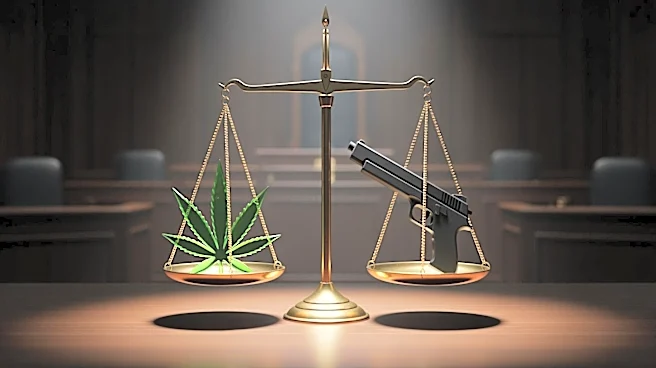
This ruling is significant as it addresses the intersection of gun rights and drug use, particularly in the context of changing attitudes towards marijuana. The decision could impact how federal laws are applied to millions of Americans who use marijuana, which is legal in some form in many states. It also highlights the court's conservative majority's tendency to support gun rights, potentially influencing future cases involving the Second Amendment. The ruling may lead to a reevaluation of how drug use is considered in relation to gun ownership, affecting both legal interpretations and law enforcement practices.
What's Next?
The Supreme Court's decision sets a precedent that could influence future cases involving gun rights and drug use. Prosecutors may need to provide more substantial evidence of danger when charging individuals under similar statutes. The ruling may also prompt legislative changes as lawmakers consider how to balance gun rights with public safety concerns. Additionally, the decision could lead to further legal challenges as courts continue to navigate the complexities of gun laws in the context of evolving drug policies.