


What's Happening?
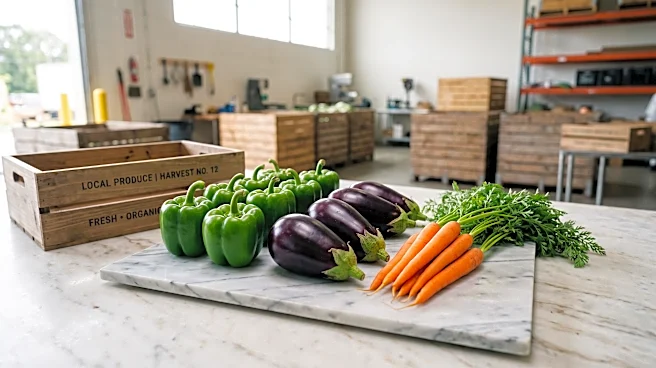
CASRAI has published a guide clarifying the definition of 'food loss,' distinguishing it from 'food waste.' Food loss refers to the decrease in the quantity or quality of food resulting from decisions and actions by food suppliers within the supply chain,
specifically from post-harvest to pre-retail stages. This includes issues like inadequate storage, poor handling, spoilage, or inefficient processing infrastructure. In contrast, food waste occurs at the retail and consumer levels, involving the disposal of food that is still safe for consumption. Understanding this distinction is crucial for researchers in agriculture, food science, and supply chain management, as it helps in optimizing supply chains and improving food security. Labs measure food loss through simulated environments, such as climate chambers, to track degradation, or by using analytical chemistry to measure nutrient loss during sample processing.
Why It's Important?
The precise definition of food loss provided by CASRAI is vital for U.S. agricultural and food industries. By clearly separating food loss from food waste, researchers and policymakers can develop more targeted interventions to address inefficiencies in the food supply chain. Food loss, often systemic and infrastructure-related, represents a significant economic burden on producers and distributors, impacting profitability and resource utilization. Reducing food loss can lead to increased food availability, lower prices for consumers, and enhanced food security across the nation. For businesses, understanding where losses occur allows for strategic investments in better storage, handling, and processing technologies, ultimately improving operational efficiency and sustainability. This distinction also helps in accurately assessing the environmental impact of food production and consumption.
What's Next?
The clarified definitions are expected to guide future research and policy development in the U.S. and internationally. Researchers will likely focus on developing innovative solutions to mitigate food loss at the post-harvest and processing stages, such as advanced storage technologies and improved supply chain logistics. The concept of 'valorization,' which involves converting food loss into high-value products like feed or energy, is also gaining traction and will be a key area of research. This will encourage the development of circular economy solutions within the agricultural sector. Furthermore, the distinction will inform governmental and non-governmental organizations in designing more effective programs and initiatives aimed at reducing overall food system inefficiencies and promoting sustainable practices.
Beyond the Headlines
The distinction between food loss and food waste highlights a deeper systemic challenge within the global food system. While consumer-level food waste often receives significant public attention, the less visible issue of food loss earlier in the supply chain represents a massive, often unaddressed, problem. Addressing food loss requires significant investment in infrastructure, technology, and education for producers and processors. This has ethical implications regarding resource allocation, food equity, and environmental stewardship. A more precise understanding of these issues can foster greater collaboration between industry, academia, and government to create a more resilient, efficient, and equitable food system, ultimately contributing to broader sustainability goals and reducing the ecological footprint of food production.