


What's Happening?
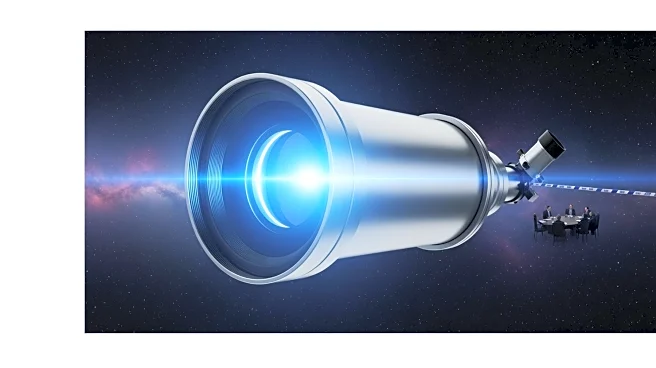
NASA is focusing on maximizing the lessons from the Roman Coronagraph technology demonstrator, which serves as a precursor to the Habitable Worlds Observatory. The project involves extensive modeling and analysis to optimize the scientific goals and design
of future space observatories. The Coronagraph Community Participation Program (CPP) is working to ensure that Roman observations provide valuable data to refine these models. The initiative includes prioritizing target selections and developing a framework for selecting observations based on their potential to yield new information. The project aims to enhance the understanding of instrument properties and improve data analysis tools.
Why It's Important?
The Roman Coronagraph project is crucial for advancing space observation technologies and methodologies. By refining models and observation strategies, NASA aims to improve the accuracy and efficiency of future space missions. This project could lead to significant advancements in the study of exoplanets and other celestial phenomena, contributing to a deeper understanding of the universe. The insights gained from the Roman Coronagraph will inform the design and operation of the Habitable Worlds Observatory, potentially leading to groundbreaking discoveries in astronomy and astrophysics.
What's Next?
As the Roman Coronagraph project progresses, NASA will continue to refine its models and observation strategies. The CPP will play a key role in selecting and prioritizing targets for observation, ensuring that each observation contributes valuable data. The project will also focus on developing robust data analysis tools to assess performance and validate scientific models. These efforts will lay the groundwork for the successful implementation of the Habitable Worlds Observatory, which is expected to further expand humanity's understanding of the cosmos.