



What's Happening?
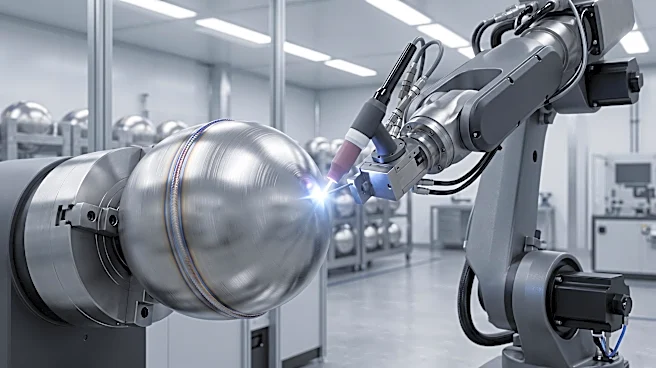
The Arkansas Materials Institute at the University of Arkansas has been awarded a $3.4 million grant from the National Science Foundation (NSF). This funding will be used to establish a robot-controlled, AI-enhanced research infrastructure aimed at accelerating
the discovery of new materials for quantum computing devices. This initiative is part of the larger, four-year, $20 million AURORA project, led by the University of Utah. The MonArk lab in Fayetteville will serve as the proving ground for AURORA, where new instruments and control software will be developed and debugged before being integrated into the production system in Utah. This system will allow researchers nationwide to conduct experiments remotely through cloud access. Professor Khoa Luu, who leads AURORA's AI team, highlighted that AI will significantly speed up the process of identifying promising new quantum materials, reducing the time from months to hours or minutes. The project also aligns with the U.S. Department of Energy's Genesis Mission, which seeks to build a national AI-for-science ecosystem.
Why It's Important?
This grant is crucial for advancing quantum computing research in the United States, a field with the potential to revolutionize various sectors, including drug discovery, battery technology, and cybersecurity. By integrating AI and robotics, the project aims to overcome the current limitations in material discovery, which is a bottleneck for developing more efficient and powerful quantum devices. The remote accessibility of the MonArk lab through the cloud will democratize access to advanced research infrastructure, enabling researchers from institutions across the country, including those without extensive resources, to contribute to quantum material science. This collaborative approach, involving institutions like Johns Hopkins University and Lawrence Berkeley National Laboratory, fosters a broader scientific community and accelerates innovation. The initiative also supports the U.S. Department of Energy's Genesis Mission, reinforcing the national effort to leverage AI for scientific breakthroughs and maintain U.S. leadership in emerging technologies.
What's Next?
The MonArk lab will focus on developing and refining new instruments and control software for the AURORA project. Once these systems are proven reliable in Fayetteville, they will be deployed to the production system in Utah, making them accessible to researchers across the country. This remote access will allow scientists to conduct experiments involving quantum materials without needing to be physically present at the facility. The project is expected to significantly reduce the time required to identify and develop new quantum materials, potentially leading to breakthroughs in qubit technology. Furthermore, the AURORA project will provide students with opportunities to collaborate with researchers from various institutions, fostering a new generation of quantum scientists and engineers. The broader goal is to contribute to a national AI-for-science ecosystem, as envisioned by the U.S. Department of Energy's Genesis Mission, driving innovation and discovery in critical scientific areas.
Beyond the Headlines
The integration of AI and robotics in material science research, as demonstrated by the AURORA project, signifies a paradigm shift in scientific discovery. This approach moves beyond traditional, labor-intensive experimental methods, enabling a more rapid and efficient exploration of vast material landscapes. The emphasis on remote accessibility through cloud infrastructure not only broadens participation but also fosters a more interconnected and collaborative scientific community, potentially leading to unexpected interdisciplinary breakthroughs. Ethically, this acceleration raises questions about the responsible development and deployment of powerful quantum technologies, particularly concerning their implications for cybersecurity and national security. The project's alignment with the Genesis Mission underscores a national strategic imperative to harness AI for scientific advancement, positioning the U.S. at the forefront of quantum technology and its societal impact, while also highlighting the importance of public-private partnerships in driving such complex research initiatives.