



What's Happening?
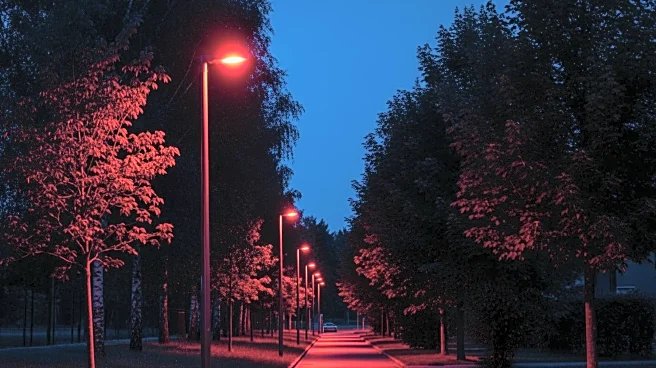
Gladsaxe Municipality, located near Copenhagen, has introduced red-spectrum LED street lighting along a 700-meter stretch of Frederiksborgvej and the Farum cycle superhighway. This initiative aims to reduce the environmental impact of artificial lighting,
particularly its disturbance to nocturnal wildlife such as bats. The red lighting provides necessary illumination for cyclists and pedestrians while minimizing ecological disruption. This project is part of the EU's Lighting Metropolis program, which uses Copenhagen as a 'living lab' to explore how lighting can enhance urban safety and environmental sustainability. The installation includes 30 one-meter-high bollards and 12 poles at 3.5 meters to ensure visibility and safety at crossing points.
Why It's Important?
The introduction of red-spectrum lighting in Gladsaxe represents a significant shift in urban planning, prioritizing ecological considerations alongside human safety. Traditional street lighting often disrupts wildlife, particularly nocturnal species, by altering their natural behaviors. By adopting red lighting, Gladsaxe aims to balance human needs with environmental protection, potentially setting a precedent for other cities worldwide. This approach aligns with broader sustainability goals, including the United Nations Sustainable Development Goals, and highlights the role of urban infrastructure in biodiversity conservation.
What's Next?
The project will undergo post-installation monitoring to assess its ecological impact, particularly on bat activity. The findings will inform future lighting projects and adjustments, potentially influencing urban lighting strategies globally. The success of this initiative could encourage other municipalities to adopt similar measures, integrating environmental considerations into urban planning and infrastructure development.