







What's Happening?
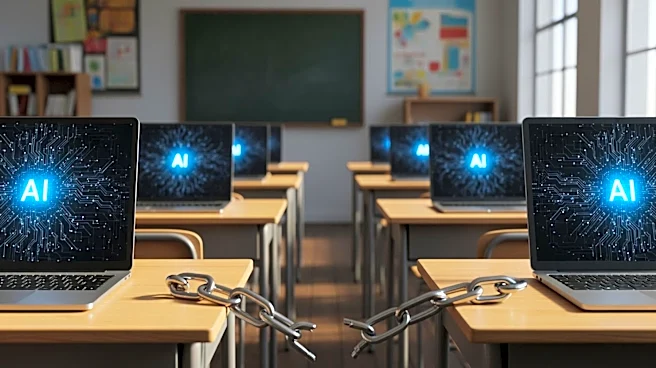
Princeton University is set to reintroduce proctoring for exams starting July 1, a practice not seen since the late 1800s. This decision comes in response to growing concerns about cheating facilitated by generative AI technologies. The university plans
to use human instructors to oversee exams and report any infractions to the student-run honor committee. This change was requested by both faculty and students, who are worried about the ease of cheating with AI on personal devices, which complicates detection and reporting. The move marks a significant shift in Princeton's honor system, which has relied on student self-reporting since 1893. A survey conducted in 2025 revealed that 30% of students admitted to cheating, yet there was no corresponding increase in cases brought before the Honor Committee.
Why It's Important?
The reintroduction of proctoring at Princeton highlights the broader challenge educational institutions face in maintaining academic integrity in the age of AI. As AI tools become more accessible, they pose a significant threat to traditional assessment methods, prompting schools to reconsider their policies. This shift could influence other universities to adopt similar measures, potentially reshaping the landscape of academic evaluation. The decision underscores the tension between technological advancement and ethical standards in education, with institutions striving to balance innovation with integrity. The outcome of Princeton's policy change could set a precedent for how other schools address AI-related cheating.
What's Next?
Princeton's decision may prompt other universities to evaluate their own policies regarding AI use in academic settings. As AI technologies continue to evolve, educational institutions will likely need to develop more sophisticated methods to detect and prevent cheating. This could lead to increased investment in AI detection tools and a reevaluation of how exams and assessments are conducted. Additionally, there may be discussions around updating honor codes and academic policies to better address the challenges posed by AI. The response from students and faculty to these changes will be crucial in determining the effectiveness and acceptance of such measures.
Beyond the Headlines
The move to reintroduce proctoring at Princeton raises questions about privacy and the potential for increased surveillance in educational settings. While proctoring aims to uphold academic integrity, it also involves monitoring students, which could lead to concerns about data privacy and the extent of surveillance. Furthermore, the reliance on human proctors may not fully address the root causes of AI-related cheating, suggesting a need for broader educational reforms. This situation highlights the ongoing debate about the role of technology in education and the ethical considerations that accompany its use.