


What's Happening?
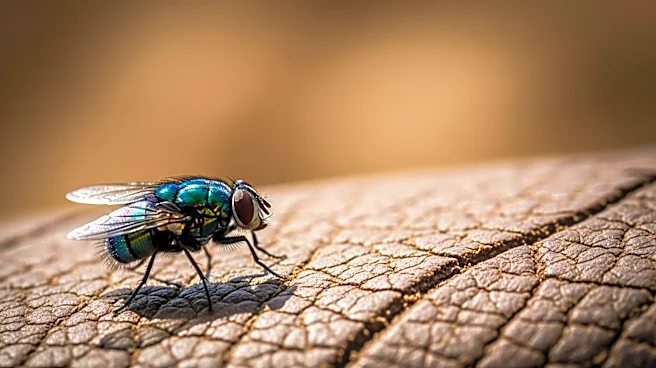
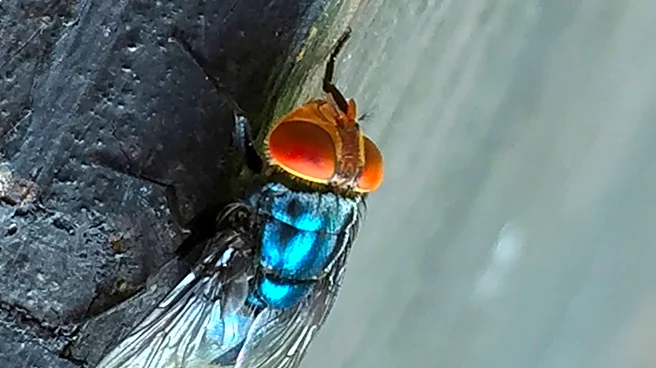
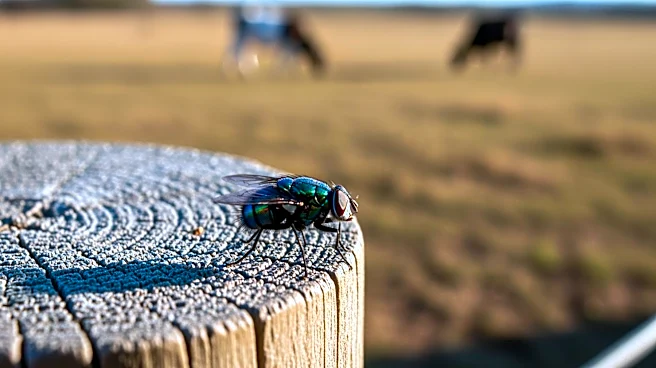
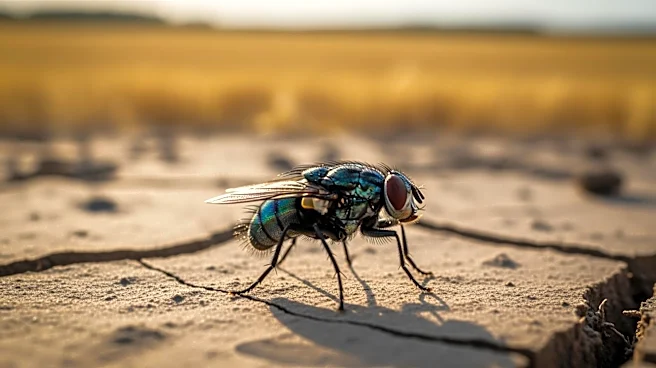
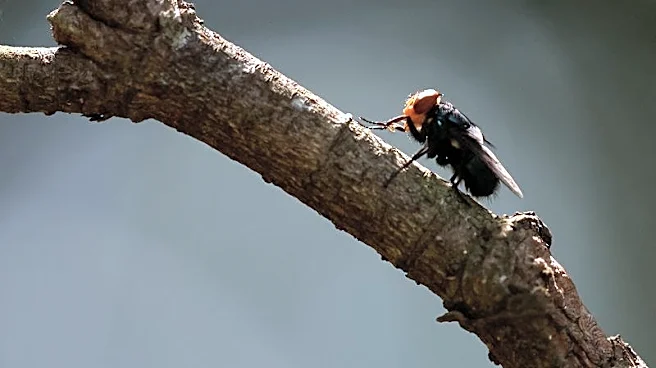
The New World screwworm fly has been detected in Texas, marking its return to the U.S. after decades. The infestation was confirmed in a 3-week-old calf in La Pryor, Texas, prompting immediate action from federal and state officials to prevent its spread.
The fly's larvae burrow into the flesh of living animals, causing significant damage and economic losses to the cattle industry. The detection has raised concerns among ranchers and agricultural groups, who are working closely with the USDA to mitigate the impact and educate farmers on protective measures. The fly was previously eradicated in the U.S. through a program that released sterile male flies to control the population. However, recent detections in Mexico and now Texas have reignited fears of widespread infestations.
Why It's Important?
The reappearance of the New World screwworm fly poses a significant threat to the $113 billion U.S. cattle industry, particularly in Texas, which is home to $17 billion worth of cattle. The fly's larvae can cause severe damage to livestock, leading to economic losses that could reach billions of dollars. The situation is further complicated by the fly's ability to infest a wide range of warm-blooded animals, including wildlife and pets. The USDA and local authorities are taking measures to control the outbreak, but the potential for widespread economic impact remains high. The situation underscores the importance of biosecurity measures and the need for ongoing vigilance in monitoring and controlling pest populations.
What's Next?
Federal and state officials have imposed a quarantine zone in parts of Texas to contain the infestation. The USDA is also ramping up efforts to release sterile flies in the affected areas to control the population. Additionally, a new fly-breeding facility is being established in southern Mexico to produce sterile flies more efficiently. These measures aim to prevent the spread of the fly and protect the cattle industry from further economic losses. The situation will require ongoing monitoring and collaboration between government agencies, ranchers, and agricultural groups to ensure effective containment and mitigation strategies.