
What's Happening?
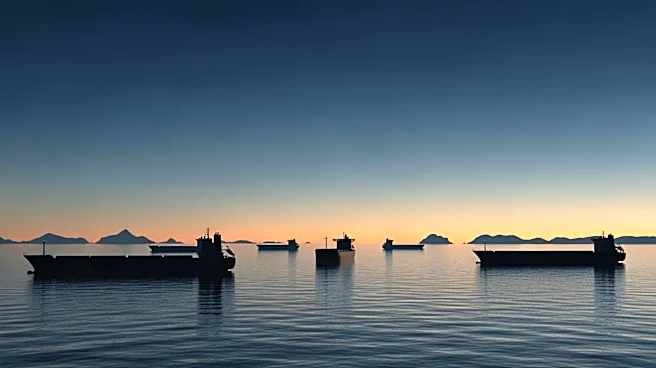
Two ships, part of Iran's 'shadow fleet' and sanctioned by the U.S., successfully navigated through the Strait of Hormuz, according to tracking data. The vessels, Ocean Jet and Lumina Ocean, are linked
to Iran's sale of drones aiding Russia's war on Ukraine. Despite U.S. sanctions, these ships managed to pass through the strait undeterred, as reported by NBC News. The U.S. Central Command has been actively enforcing a blockade in the region, with the USS George W. Bush aircraft carrier joining the mission to search for mines and maintain the strait's security. The blockade, initiated by President Trump on April 12, aims to pressure Iran by restricting vital trade routes. However, some vessels, including a Russian yacht, have continued to pass through the strait.
Why It's Important?
The passage of these sanctioned vessels highlights the challenges faced by the U.S. in enforcing maritime sanctions and maintaining control over strategic waterways. The Strait of Hormuz is a critical chokepoint for global oil trade, and any disruption can have significant implications for international energy markets. The U.S. blockade is part of a broader strategy to exert pressure on Iran, but the ability of these ships to navigate the strait suggests potential gaps in enforcement. This situation underscores the complexities of international sanctions and the geopolitical tensions in the region, which could impact global trade and diplomatic relations.
What's Next?
The U.S. is likely to continue its naval operations in the region to enforce the blockade and prevent further breaches by sanctioned vessels. The ongoing tensions between the U.S. and Iran may lead to increased military presence and potential confrontations in the Strait of Hormuz. Additionally, the international community may call for diplomatic efforts to address the underlying issues and prevent escalation. The effectiveness of the U.S. sanctions and blockade will be closely monitored, as will Iran's response to these measures.
Beyond the Headlines
The situation raises questions about the effectiveness of unilateral sanctions and the potential for unintended consequences in international relations. The ability of sanctioned vessels to navigate strategic waterways could embolden other nations to challenge U.S. sanctions, potentially leading to a reevaluation of global trade policies. Furthermore, the ongoing tensions in the region may influence future U.S. foreign policy decisions and impact its relationships with allies and adversaries.