







What's Happening?
The U.S. State Department announced a ceasefire agreement between Israel and Lebanon, contingent on Hezbollah halting its fire and withdrawing from south of the Litani River. Despite the announcement, Hezbollah has not acknowledged the talks, and its fire continues,
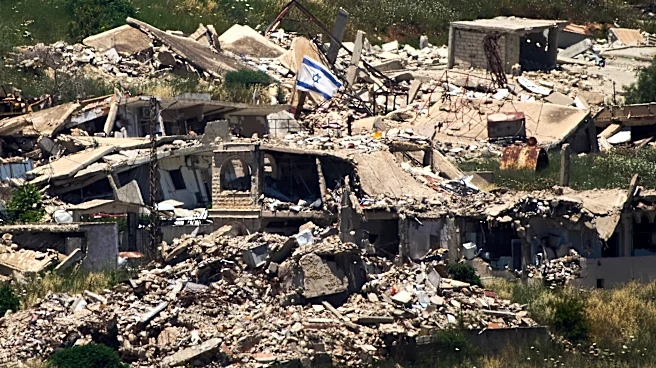
raising doubts about the ceasefire's effectiveness. Israeli officials emphasize that IDF forces will remain in captured areas, including Beaufort Ridge, while operations to dismantle Hezbollah infrastructure persist. The ceasefire aims to push Lebanon to confront Hezbollah directly, with the Lebanese army expected to deploy in designated sectors. The situation remains tense, with disagreements among Israeli leaders about the ceasefire's terms and implications.
Why It's Important?
The ceasefire represents a significant diplomatic effort to stabilize the region and reduce hostilities between Israel and Hezbollah. However, the ongoing fire from Hezbollah challenges the ceasefire's viability and highlights the complexities of achieving lasting peace. The situation affects regional security dynamics and could influence U.S. foreign policy in the Middle East. The ceasefire's success depends on Lebanon's ability to enforce the agreement and address Hezbollah's presence. Failure to achieve a lasting ceasefire may lead to further military escalation and impact civilian populations in the region.
What's Next?
The ceasefire's implementation will depend on Hezbollah's response and Lebanon's actions to enforce the agreement. Diplomatic efforts may continue to address the underlying issues and ensure compliance with the ceasefire terms. The situation may lead to increased international involvement and pressure on Lebanon to confront Hezbollah. Israeli military operations may persist if Hezbollah continues its activities, potentially leading to further conflict. The outcome of the ceasefire could influence future negotiations and regional stability, with implications for U.S. foreign policy and international relations.