








What's Happening?
The enforcement of international sanctions is increasingly moving from financial systems to physical maritime interdiction. This shift is driven by the development of evasion networks by targeted countries, which have undermined traditional financial sanctions.
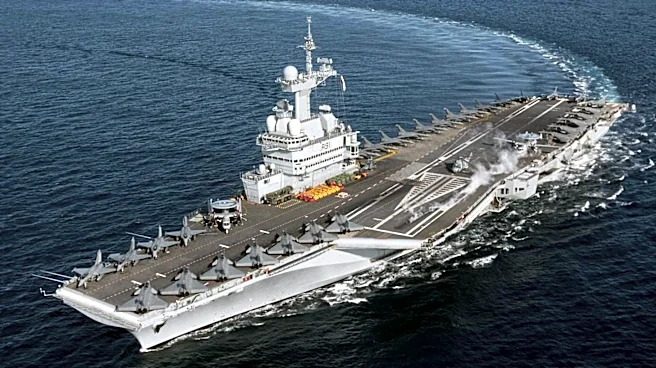
The U.S. and its partners are now focusing on boarding ships at sea to enforce sanctions, particularly against vessels suspected of carrying sanctioned cargo. This approach has been notably applied to the so-called 'shadow fleet' tankers transporting Russian oil, as well as Iranian and Venezuelan vessels. The trend marks a departure from the post-Cold War reliance on financial infrastructure to restrict trade, as countries now employ naval forces to directly intercept and inspect ships.
Why It's Important?
This shift in sanctions enforcement has significant implications for global trade and geopolitical dynamics. By moving enforcement to the seas, the U.S. and its allies aim to close gaps left by financial sanctions, which have become less effective due to sophisticated evasion tactics. The maritime approach underscores the critical role of shipping lanes in the global economy, as over 80% of trade by volume is transported by sea. However, this method also raises legal and operational challenges, as it operates within a fragmented international legal framework not designed for such enforcement. The increased use of naval power to enforce economic sanctions could lead to heightened tensions and potential conflicts at sea.
What's Next?
As maritime interdiction becomes a more common tool of economic statecraft, it is likely to expand beyond current regions and contexts. The lack of a unified international framework for sanctions enforcement at sea could lead to inconsistent and potentially conflicting outcomes. Countries may continue to develop their own enforcement strategies, leading to a more fragmented and unpredictable global trade environment. The ongoing use of naval forces for sanctions enforcement may also prompt other nations to adopt similar tactics, further complicating international maritime law and increasing the risk of miscalculation and conflict.
Beyond the Headlines
The reliance on maritime interdiction highlights the limitations of existing international legal frameworks in addressing modern sanctions enforcement. The U.N. Convention on the Law of the Sea, which governs maritime activities, was not designed to accommodate the complexities of current economic sanctions. This legal gap creates challenges for consistent enforcement and dispute resolution. As countries increasingly use naval power to enforce sanctions, there is a growing need for updated international agreements that can provide clear guidelines and reduce the risk of conflict. The evolving nature of sanctions enforcement also reflects broader shifts in global power dynamics, as nations adapt to new geopolitical realities.