
What's Happening?
Polymarket, a prediction market platform, has significantly reduced the probability of a hantavirus pandemic occurring by 2026 to 7%, marking a 28% decrease this week. This adjustment follows the World
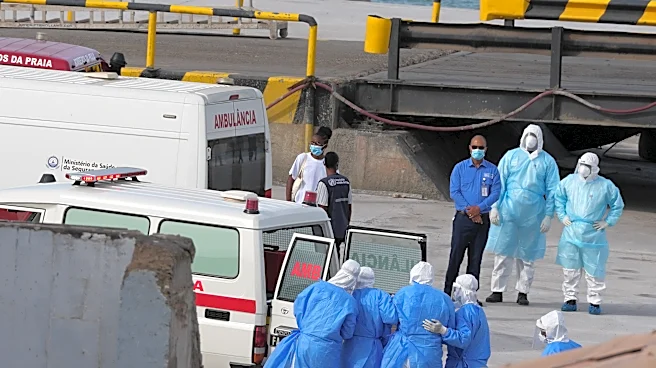
Health Organization's (WHO) assessment that the current risk of hantavirus outbreaks to the public remains low. The prediction market's criteria for determining a pandemic rely on official WHO communications. If the WHO labels hantavirus or related syndromes as a pandemic in an official statement by the end of 2026, the market will conclude with a 'Yes'; otherwise, it will be a 'No'. Maria Van Kerkhove, acting director of the WHO's Epidemic and Pandemic Preparedness and Prevention division, emphasized the low risk during a recent discussion. She also mentioned the evacuation of personnel from the 'Hondius' cruise ship, where a hantavirus outbreak was reported, and recommended a 42-day monitoring period for those who had contact with confirmed or suspected cases.
Why It's Important?
The reduction in the predicted probability of a hantavirus pandemic reflects a broader confidence in current public health measures and the WHO's assessment of the situation. This development is significant for public health policy and global health security, as it suggests that the threat level is manageable with existing protocols. For investors and stakeholders in health-related markets, this prediction adjustment may influence decision-making and risk assessments. The WHO's involvement and communication play a crucial role in shaping public perception and policy responses to potential health threats, impacting how resources are allocated and prioritized in the health sector.
What's Next?
The WHO will continue to monitor hantavirus outbreaks and provide updates as necessary. The 42-day monitoring period for those exposed on the 'Hondius' cruise ship will be critical in assessing the potential spread and impact of the virus. Public health authorities may adjust their strategies based on new data and WHO guidance. Stakeholders in the health sector, including governments and health organizations, will likely remain vigilant and prepared to implement additional measures if the situation changes. The prediction market will continue to adjust its probabilities based on new information and official statements from health authorities.