





What's Happening?
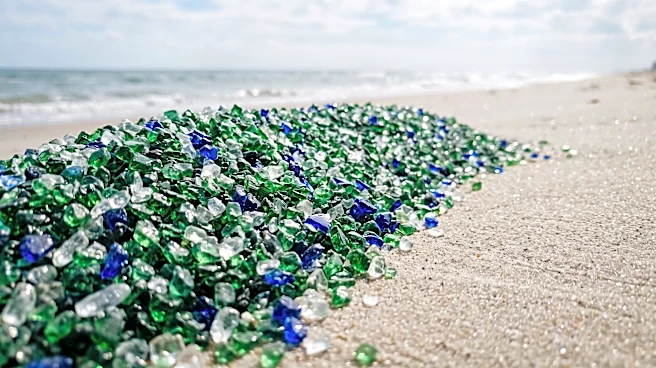
In rural coastal Franklin County, Florida, a community-driven initiative is converting glass bottles into sand for environmental restoration projects. This innovative recycling solution, spearheaded by Lynn Wilder, Executive Director of Keep Franklin County Beautiful,
addresses the limited traditional recycling options in the area, where most waste typically requires transportation nearly 100 miles away. Utilizing a mobile glass-crushing machine set up at the Apalachicola Yacht Club, the program transforms discarded glass into a valuable resource. This recycled sand is then used for shoreline restoration, oyster reef projects, and sustainable landscaping, diverting approximately 30,000 pounds of glass from landfills. The project highlights creative problem-solving, local partnerships, and dedicated volunteerism in tackling waste management and ecological preservation.
Why It's Important?
This initiative in Franklin County, Florida, offers a significant model for sustainable waste management and environmental conservation, particularly for small, rural communities with limited infrastructure. By repurposing glass waste into sand, the project directly reduces landfill burden and provides a cost-effective, local source of material for critical ecological projects. Shoreline restoration and oyster reef development are vital for protecting coastal ecosystems, preventing erosion, and supporting marine biodiversity, which are crucial for Florida's environment and economy. The success of this program demonstrates how local innovation and community engagement can create tangible environmental benefits, inspiring other communities facing similar challenges to develop their own sustainable solutions. It also underscores the economic value of waste materials when creatively re-integrated into local economies and ecosystems.
What's Next?
The success of Franklin County's glass-to-sand recycling program could serve as a blueprint for other coastal communities in Florida and beyond, especially those with limited recycling infrastructure. Keep America Beautiful, through its podcast 'Do Beautiful Things,' is actively promoting this model, which may lead to increased adoption of similar initiatives. Future steps could involve expanding the capacity of the mobile glass-crushing operation, securing more partnerships with local businesses and organizations, and increasing volunteer participation. The program's impact on local ecosystems, such as the health of oyster reefs and the stability of shorelines, will likely be monitored to demonstrate its long-term benefits. This could also encourage policy discussions around supporting localized recycling and resource recovery efforts at state and national levels.
Beyond the Headlines
The Franklin County initiative represents more than just a recycling program; it embodies a shift towards a circular economy model at the local level. By transforming waste into a resource for ecological restoration, the community is actively participating in closing material loops and fostering environmental resilience. This approach challenges the traditional linear model of consumption and disposal, promoting self-sufficiency and local resourcefulness. Furthermore, the project strengthens community bonds through volunteerism and shared environmental stewardship, creating a sense of collective responsibility for the local ecosystem. It highlights the potential for small-scale, community-led efforts to have a significant impact on broader environmental challenges, demonstrating that sustainable solutions can be both practical and deeply integrated into the fabric of local life, fostering a more sustainable relationship between communities and their natural surroundings.