






What's Happening?
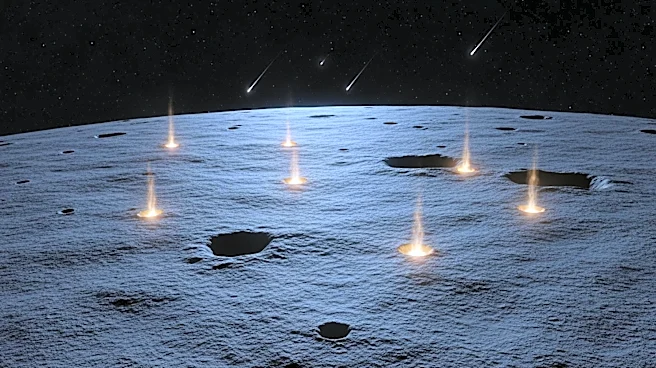
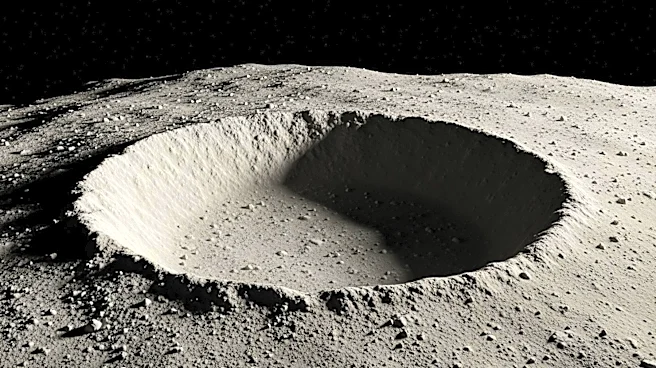
NASA's Lunar Reconnaissance Orbiter has captured images of a newly formed crater on the Moon, measuring 225 meters across. This crater, formed by a high-speed space rock impact, is significantly larger than any previously recorded during the mission,
with the largest prior crater being only 70 meters across. The impact, which occurred in late spring 2024, is considered a rare event, expected to happen only once every 139 years on any given lunar surface area. The crater is funnel-shaped, 43 meters deep, and surrounded by large blocks of ejected rock. The impactor's direction was inferred from the debris distribution, indicating it arrived from the south-southwest. Inside the crater, areas of dark material, likely glassy rock, were found, formed by the intense heat of the impact.
Why It's Important?
The discovery of this large crater provides a unique opportunity for scientists to study lunar impacts in detail. The high-quality before-and-after images allow researchers to refine models of crater formation, not only on the Moon but across the Solar System. Understanding these processes is crucial for planetary science, as it helps predict the effects of similar impacts on other celestial bodies. The data gathered from this event can improve our knowledge of lunar geology and contribute to future lunar exploration missions. Additionally, studying such impacts can inform strategies for protecting Earth from potential asteroid threats.
What's Next?
Researchers will continue to analyze the images and data collected from the crater to enhance their understanding of impact dynamics. This may involve comparing the new findings with existing models and conducting simulations to predict future impacts. The insights gained could influence the design of future lunar missions, particularly those focused on resource extraction or establishing a human presence on the Moon. Scientists may also explore the possibility of using similar observational techniques to monitor other planetary bodies for impact events.
Beyond the Headlines
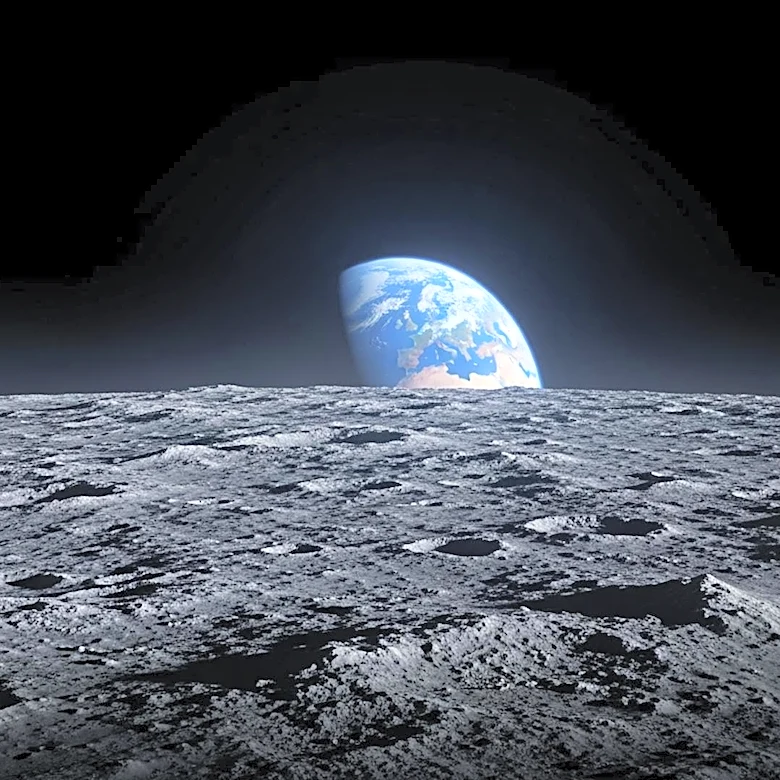
The formation of this crater highlights the ongoing bombardment of the Moon by space debris, a process that has shaped its surface for billions of years. Unlike Earth, the Moon lacks weathering processes that can erase impact scars, making it an ideal location for studying the history of the Solar System. This event underscores the importance of continued lunar observation and exploration, as the Moon serves as a natural laboratory for understanding planetary evolution and the effects of cosmic impacts.