




What's Happening?
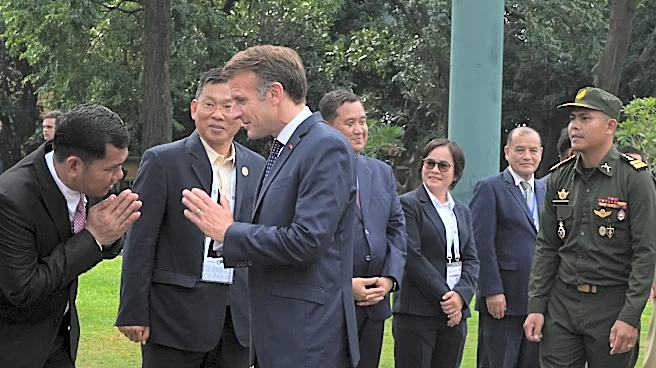
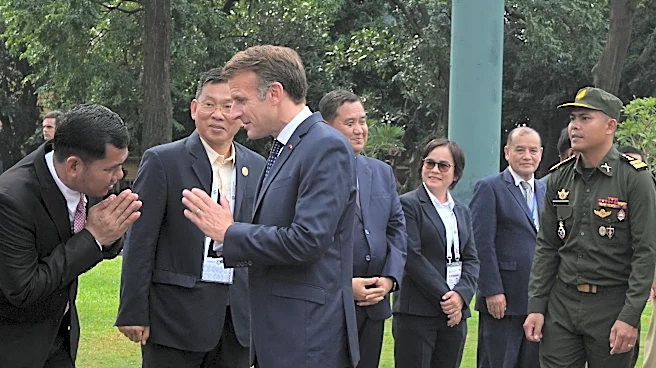
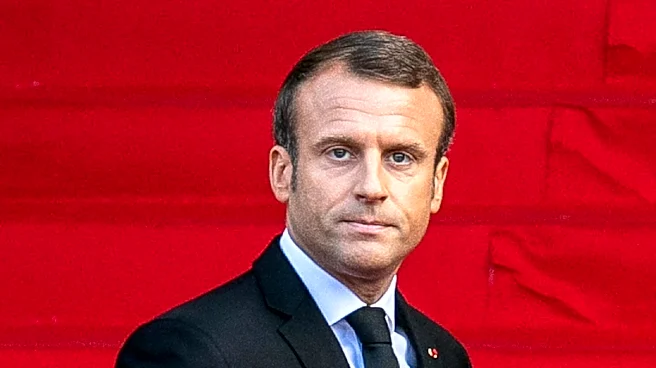
Emmanuel Macron, President of France, is currently on an official visit to Malaysia, accompanied by Mrs. Brigitte Macron. The visit, which took place from November 16 to 17, 2026, aims to elevate the bilateral relationship between France and Malaysia to a strategic
partnership. Upon arrival, President Macron and his wife were welcomed by Malaysian Prime Minister Anwar Ibrahim. Several agreements have been signed to strengthen cooperation across various sectors, including defense and security, critical minerals, energy transition, aeronautics and space, artificial intelligence, cybersecurity, and semiconductors. President Macron emphasized France's independent defense model, highlighting its self-sufficiency in critical capacities and deterrence, and expressed a desire for increased collaboration with Malaysia on defense equipment such as helicopters, submarines, fighter jets, and radars. The visit underscores a mutual interest in fostering greater independence and de-risking strategies in a complex global environment.
Why It's Important?
This elevation of the France-Malaysia relationship to a strategic partnership holds significant implications for both nations and potentially for broader international relations. For France, it represents an expansion of its influence and economic ties in Southeast Asia, a region of growing geopolitical and economic importance. By strengthening defense and security cooperation, France aims to diversify its partnerships and reinforce its position as an independent global actor, less reliant on traditional alliances. For Malaysia, the partnership offers access to advanced French technology and expertise in critical sectors like defense, energy, and digital infrastructure, which can bolster its national security and economic development. The focus on critical minerals and energy transition also aligns with global efforts towards sustainable development and supply chain resilience. This collaboration could serve as a model for other nations seeking to balance their relationships with major global powers while pursuing strategic autonomy.
What's Next?
Following the official visit, the signed agreements are expected to lead to concrete projects and increased collaboration between French and Malaysian companies and institutions. Further discussions and negotiations are anticipated in areas such as defense procurement, particularly for submarines and fighter jets, and the implementation of energy transition initiatives, including potential cooperation on nuclear energy. The establishment of an ASEAN School of Regulators in Malaysia, supported by the French Development Agency, is set to open soon, indicating a commitment to long-term capacity building. Both countries are also keen to accelerate the EU-Malaysia Trade and Investment Agreement and address non-tariff barriers to facilitate smoother business operations. France is actively encouraging Malaysian investment, highlighting its attractiveness as a business hub in Europe, with a 'Choose France Summit' scheduled for January 18 in Versailles to further promote investment opportunities.
Beyond the Headlines
The strategic partnership between France and Malaysia reflects a broader trend of nations seeking to diversify their international relationships and enhance strategic autonomy in an increasingly multipolar world. President Macron's emphasis on France's independent defense model and the shared goal of 'de-risking' from over-reliance on any single major power (such as China or the U.S.) highlights a desire for a more balanced global order. This approach could have ethical and cultural implications, fostering a more diverse set of international norms and practices rather than a singular dominant influence. The focus on critical minerals and semiconductors also underscores the growing importance of secure supply chains for advanced technologies, which is a key concern for national security and economic stability globally. This partnership could contribute to a more resilient and diversified global economy, reducing vulnerabilities to geopolitical shocks.