





What's Happening?
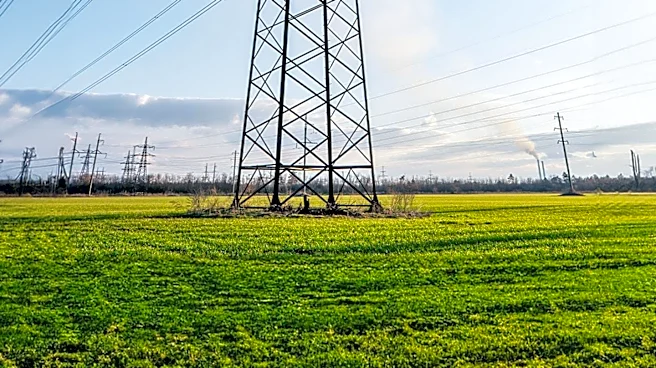
The Inter-American Development Bank (IDB) played a significant role in funding the Central American Electrical Interconnection System (SIEPAC), a project that was completed in 2014 after decades of planning and construction. The SIEPAC project involved
the creation of an 1,800-kilometer transmission line spanning six countries in Central America. The total cost for planning, construction, and infrastructure amounted to nearly half a billion dollars, with over half of this funding provided by the IDB. This ambitious project aimed to improve electrical markets, provide electricity, and enhance telecommunications for millions of residents throughout the region. Despite taking longer than initially expected to come to fruition, SIEPAC has been recognized for boosting regional connectivity and energy access.
Why It's Important?
The IDB's substantial investment in SIEPAC is highly important for U.S. interests in Central America. Energy security and regional integration are critical for stability and economic growth in the area, directly impacting U.S. trade, investment, and security concerns. By funding a project that enhances electricity access and telecommunications across six Central American nations, the IDB contributes to reducing energy poverty and fostering economic development, which can mitigate factors leading to instability and irregular migration to the U.S. A more interconnected and reliable energy grid can also attract foreign investment, including from U.S. companies, and support industrial growth in the region. Furthermore, the project's long-term impact on improving electrical markets and telecommunications infrastructure strengthens the overall economic resilience of Central America, aligning with U.S. foreign policy objectives for a prosperous and secure Western Hemisphere.
What's Next?
The completion of SIEPAC in 2014 marked a significant milestone in Central American energy integration. Moving forward, the focus will likely be on optimizing the operation of the 1,800-kilometer transmission line, further integrating regional electrical markets, and exploring opportunities for expanding renewable energy sources within the interconnected system. The IDB, as a key financier, will continue to monitor the project's long-term impact and may support additional initiatives aimed at strengthening energy infrastructure and promoting sustainable energy solutions in the region. This ongoing development of the energy sector in Central America will continue to be a point of interest for U.S. policymakers and businesses looking to engage with the region.
Beyond the Headlines
The SIEPAC project, largely funded by the IDB, represents more than just an electrical transmission line; it symbolizes a profound effort towards regional cooperation and integration in Central America. The decades-long planning and construction process highlight the complexities and challenges inherent in large-scale, multi-national infrastructure projects. Ethically, providing reliable electricity and telecommunications to millions of residents addresses fundamental development needs, improving quality of life, educational opportunities, and economic participation. Culturally, such a project can foster a sense of shared purpose and interdependence among the participating nations. The long-term implications include enhanced regional stability, reduced reliance on external energy sources, and a stronger foundation for sustainable economic growth, ultimately contributing to a more resilient and self-sufficient Central America.