
What's Happening?
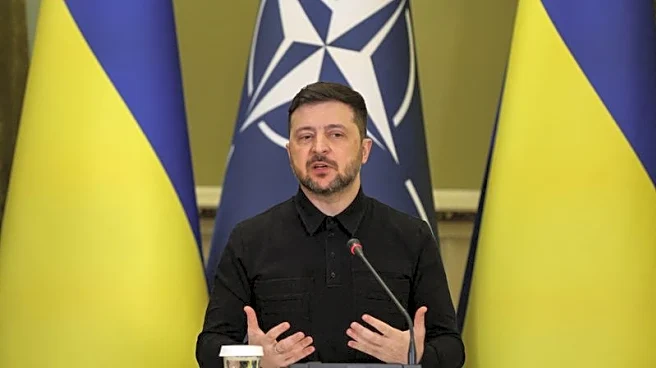
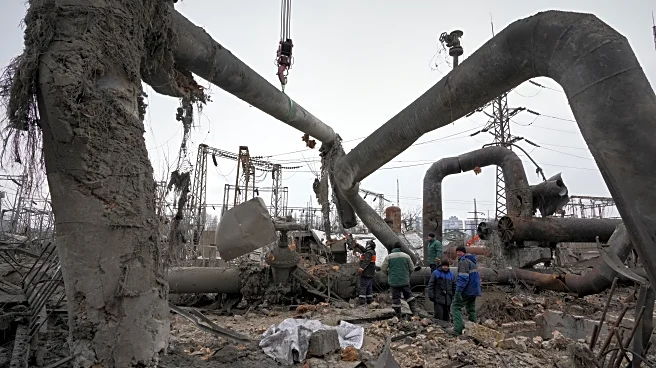
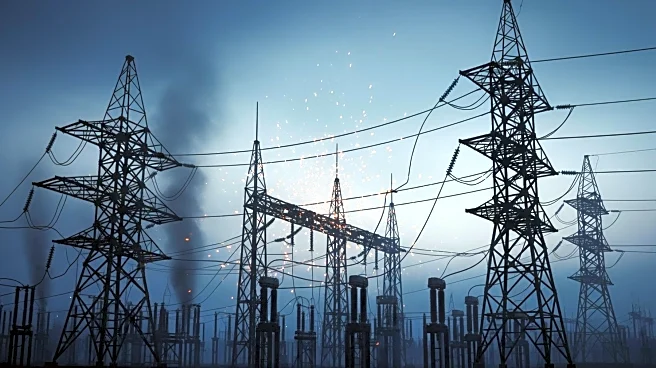
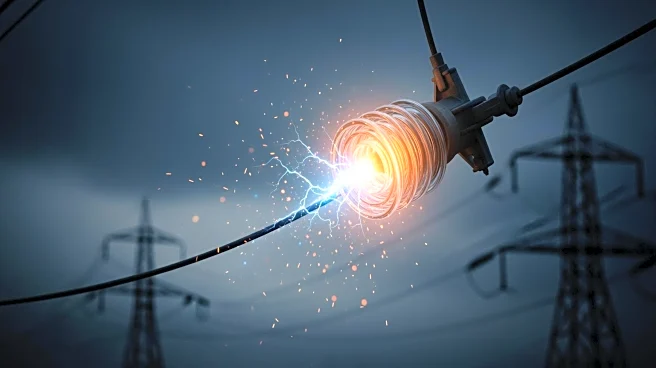
President Volodymyr Zelensky has declared a state of emergency in Ukraine's energy sector, focusing on Kyiv, due to severe disruptions caused by Russian attacks. These attacks have left many residents
without essential services like power, heating, and water amidst freezing temperatures. A task force has been established to manage the crisis, with Energy Minister Denys Shmyhal leading the efforts. The government is working with foreign partners to secure energy equipment and boost electricity imports. Additionally, measures are being taken to ensure public access to 'invincibility points' that provide power and heat.
Why It's Important?
The energy crisis in Ukraine highlights the vulnerability of critical infrastructure during conflicts and the severe impact on civilian life. The declaration of a state of emergency underscores the urgent need for international support and coordination to address the humanitarian and logistical challenges. This situation could influence global energy markets and international relations, as countries may need to reassess their energy security strategies. The crisis also emphasizes the importance of resilient infrastructure and the potential role of renewable energy sources in mitigating such vulnerabilities.
What's Next?
Ukraine will continue to seek international assistance to stabilize its energy sector. The government may implement further emergency measures to protect civilians and maintain essential services. The ongoing conflict and energy crisis could lead to increased diplomatic efforts to resolve the situation. Additionally, there may be a push for long-term investments in energy infrastructure to prevent future crises. The international community's response will be crucial in shaping the outcome and future stability of Ukraine's energy sector.