
What's Happening?
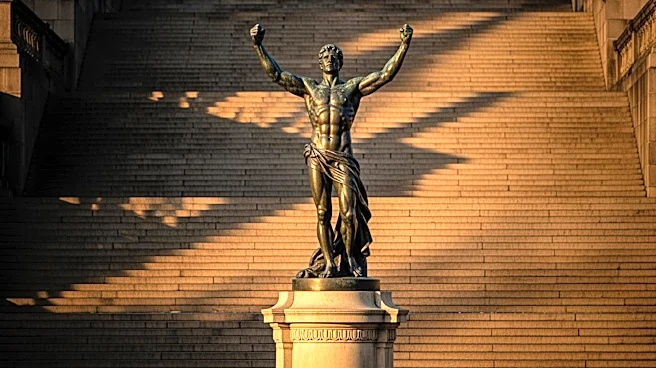
The Philadelphia Museum of Art has decided to embrace the iconic Rocky Balboa statue by bringing it inside for a new exhibition titled 'Rising Up: Rocky and the Making of Monuments.' This move marks a significant
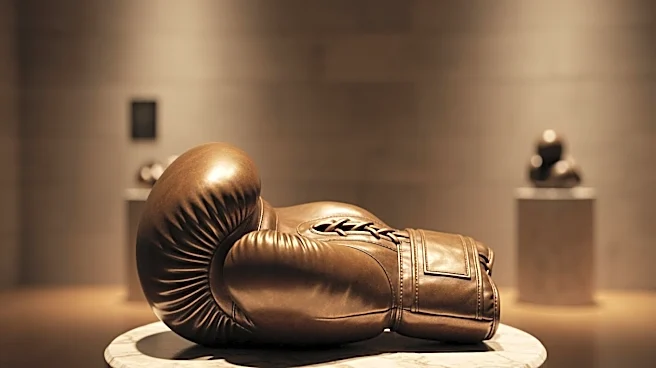
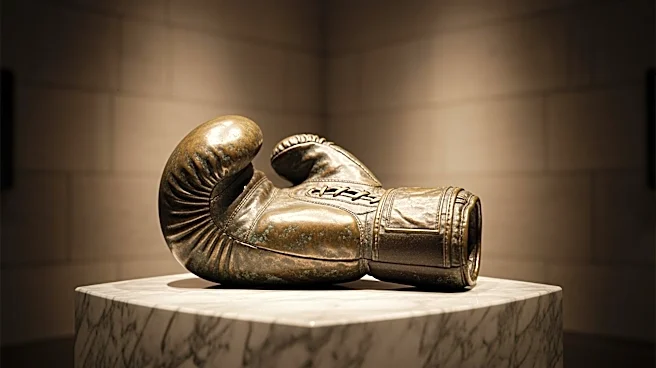
shift in the museum's relationship with the statue, which has been a popular attraction for visitors from around the world. The exhibition, curated by Paul Farber, explores the cultural and historical significance of the Rocky statue, placing it within the broader context of art history and Philadelphia's identity. The exhibition features over 2,000 years of boxing imagery, highlighting the universal themes of struggle and endurance that the Rocky character embodies. The museum's decision to host this exhibition reflects a growing acceptance of the statue's place in both the city's and the museum's narrative.
Why It's Important?
The decision to bring the Rocky statue inside the Philadelphia Museum of Art is significant as it represents a reconciliation between the museum and a cultural icon that has long been associated with the city. The statue, originally a prop from the 'Rocky' films, has become a symbol of perseverance and resilience, resonating with people globally. By hosting this exhibition, the museum acknowledges the statue's impact on Philadelphia's cultural landscape and its role in attracting millions of visitors annually. This move could enhance the museum's appeal, drawing in a broader audience interested in both popular culture and traditional art. It also highlights the evolving nature of public monuments and their role in shaping cultural identity.
What's Next?
Following the exhibition, the Rocky statue will be moved to a permanent location at the top of the museum's steps, a position it has never officially held. This relocation signifies a formal recognition of the statue's importance to the museum and the city. Additionally, a statue of Joe Frazier, a real-life inspiration for the Rocky character, will be placed at the bottom of the steps, further cementing the connection between Philadelphia's boxing history and its cultural icons. This development may prompt further discussions on the role of public art and monuments in representing local history and identity.